 listicle
Hand Rolled Cigars: What to Look For Before You Buy
Last Updated: November 5, 2026
Quick Summary
To choose hand rolled cigars, inspect the construction first: the stick should feel firm and even from cap to foot, with a smooth, oily wrapper and a neat cap. Confirm the filler is whole long-filler tobacco, since machine-made cigars use chopped short filler and burn fast and hot. Match the vitola and strength to the smoker, and store your cigars at stable humidity in a humidor.
- Machine-made cigars use chopped short filler and cut wrappers, burning fast and hot.
- U.S. premium handmade cigar imports reached 242.8 million through July 2026, up 0.5% year over year.
- Core premium hand rolled cigars typically cost $10-$18 per cigar, the sweet spot for most smokers.
- Beginners should start with a Corona or Robusto in a mild to medium-bodied blend.
- Store cigars in a humidor at stable humidity; dryness cracks wrappers and excess moisture risks mold.
Table of Contents
- Why Hand Rolled Cigars Still Command a Premium
- How to Judge Construction Before You Pay
- The Best Hand Rolled Cigars Worth Your Humidor Space
- Hand Rolled Cigars Brands That Earn Their Reputation
- What Hand Rolled Cigars Price Actually Buys You
- Sizes, Shapes, and Strength: Matching the Stick to the Smoker
- Hand Rolled Cigars for Events and Gifting
- Storing Your Cigars So They Stay Fresh
- Frequently Asked Questions
Why Hand Rolled Cigars Still Command a Premium
An estimated 8.6 million U.S. adults aged 18 and older currently smoked cigars in 2021, according to the CDC's cigar use data. That number explains why hand rolled cigars remain a serious category rather than a novelty. At laffogatocoffee.com, we sell handmade cigars alongside our Italian pastries and coffee, and customers often ask what actually separates a good stick from an expensive one?
The answer comes down to construction, leaf quality, and how the cigar was made. Machine-made cigars use shredded short filler and cut wrappers, faster and cheaper, but a looser draw and a hotter burn.
The premium is real. U.S. imports of premium handmade cigars reached 242.8 million through July 2026, up 0.5% from the same period in 2025, per Mordor Intelligence's market data. Buyers keep paying more because the difference shows up in the smoke.
Below, we break down how to judge construction, which brands earn their reputation, what price actually buys you, and how to store your cigars.
How to Judge Construction Before You Pay
Construction is the first thing to check, and it costs nothing to inspect. Run your fingers along the cigar and look for soft spots, hard lumps, or cracks in the wrapper. A well-made hand rolled cigar feels firm and even from cap to foot.
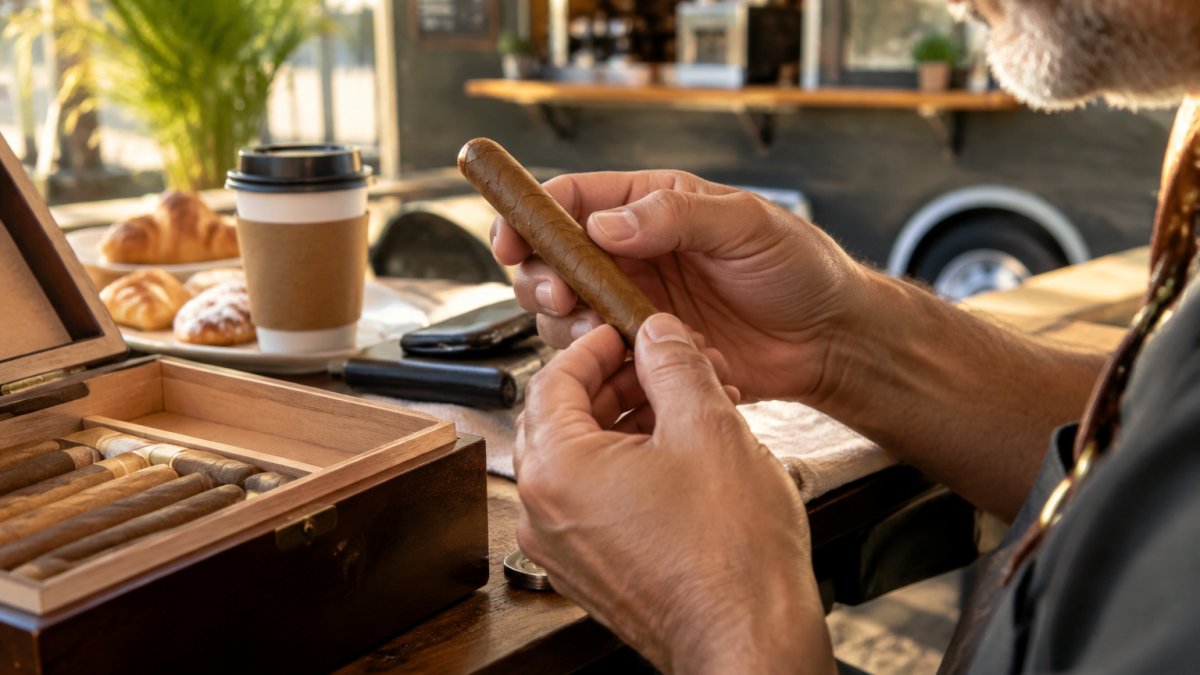
Reading the Wrapper, Binder, and Filler
A hand rolled cigar has three parts. The wrapper is the outer leaf, contributing most of the aroma and much of the flavor. The binder holds the filler together. The filler is the bunch of long-filler tobacco leaves at the core, and whole leaves create the slow-burning, even draw that defines a quality smoke.
Look for a wrapper with a smooth, oily sheen and fine veins; a dull, dry, or heavily veined wrapper signals poor handling. The cap should sit flat and neat, a sloppy cap often means a tight or uneven draw.
Hand-Rolled Versus Machine-Made
Machine-made cigars use chopped short filler and a cut wrapper, so they burn fast and hot. Hand rolled cigars use whole long-filler tobacco, which burns cooler and slower with a more complex flavor profile.
Watch out: a retailer selling machine-made cigars as "hand-rolled" is the most common mislabeling in the category. Ask to see the box stamp and check whether the filler is described as long-filler. If the description is vague, walk away.
The Best Hand Rolled Cigars Worth Your Humidor Space
Our shortlist draws on published ratings and editorial selections, the most reliable signals available before you light up.
| Cigar | Format | Recognition | Best For |
|---|---|---|---|
| Plasencia Alma Fuerte Robustus I | Robusto | Cigar of the Year, Robb Report Monaco 2026 | A special-occasion smoke |
| Rocky Patel Thirtieth Anniversary Toro | Toro | Rated 92, Cigar Aficionado Jan/Feb 2026 | Balanced, medium-bodied sessions |
| Villiger La Capitana Toro | Toro | Rated 92, Cigar Aficionado Jan/Feb 2026 | Gift and event purchases |
| Aganorsa Leaf Arsenio Corona | Corona | Rated 91, Cigar Aficionado Jan/Feb 2026 | A shorter, focused smoke |
| Arturo Fuente OpusX Fuente Fuente | Fuente Fuente | Named in Chaveta's 2026 New World list | Collectors and seasoned aficionados |
| Oliva Serie V | Various | Named in Chaveta's 2026 New World list | Full-bodied flavor seekers |
The Plasencia Alma Fuerte Robustus I took Cigar of the Year in Robb Report Monaco's 2026 Best of the Best feature, making it the most decorated stick here. The Rocky Patel and Villiger Toros both scored 92 in Cigar Aficionado's January/February 2026 ratings, and the Aganorsa Leaf Arsenio Corona followed at 91.
Hand Rolled Cigars Brands That Earn Their Reputation
Brand reputation here is built on consistency, not marketing. The makers below earned their place through decades of steady production. Use this as a buying guide, not a ranking.
The Established Names
Arturo Fuente is the standout for most buyers. The portfolio spans mild to full-bodied.
Oliva earns its reputation on value. The Serie V is a full-bodied stick.
Rocky Patel offers a range of blends, wrappers, and sizes.
Villiger is best known for machine-made lines, but La Capitana is a hand rolled line. Check the specific line, not just the brand.
Aganorsa Leaf is a grower-backed maker, and Known for its Corojo and Criollo leaf, it is a good choice for a shorter, focused smoke.
How to Compare Makers Before You Buy
Three practical checks help:
- Line consistency. Look for a maker that describes its filler as long-filler across the line, not just on its flagship.
- Wrapper transparency. Makers that name the wrapper origin and type (Connecticut shade, Habano, maduro, Corojo) are easier to compare than makers that use vague language.
- Strength labeling. A maker that publishes strength and body ratings for each line saves you guesswork. If the box or product page does not say, ask the retailer.
Watch out: a famous brand name on a bundle does not guarantee a hand rolled cigar. Some brands sell both handmade and machine-made products under the same name, so check the specific line and filler description rather than trusting the logo.
Matching a Maker to Your Palate
New to hand rolled cigars? Start with Ashton Classic or Oliva Connecticut Reserve for a mild profile, then move to Padrón or Oliva Serie V as your palate develops. Buying a gift for an experienced smoker? Arturo Fuente OpusX or Plasencia Alma Fuerte sends a clear signal. Want the best value for a daily smoke? Oliva and Rocky Patel are the most reliable starting points.
What Hand Rolled Cigars Price Actually Buys You
Older tobacco ties up warehouse time and capital; skilled master rollers command higher wages; limited-production lines sell out fast. But the sticker price alone tells you very little.
Typical U.S. Price Bands for Hand Rolled Cigars
| Price Band | Typical Per-Cigar Price | What You Are Buying |
|---|---|---|
| Value hand rolled | $6-$10 | Younger filler, simpler blends, often bundled or house-brand lines; still long-filler and hand rolled |
| Core premium | $10-$18 | Aged filler, better wrapper leaves, consistent construction; the sweet spot for most smokers |
| Upper premium | $18-$30 | Longer-aged tobacco, limited wrapper crops, brand-name consistency |
| Ultra-premium and limited | $30-$100+ | Rare wrapper leaves, multi-year aging, small production runs, collector packaging |
What Drives the Price Up
- Leaf age. Tobacco aged three to five years ties up warehouse space and capital, and that cost lands in the price. A young blend can still be well made, but it will usually taste sharper and burn hotter.
- Wrapper quality. Wrapper leaf is the most expensive component per pound because it must be unblemished and elastic. A flawless Connecticut shade or dark maduro wrapper can account for a large share of a cigar's cost.
- Roller skill. A master roller who can produce a consistent draw across thousands of sticks commands a higher wage than a production roller.
- Scarcity. Limited-edition lines, vintage crops, and small-batch releases sell out quickly, and retailers price them accordingly.
- Size. A Churchill uses more tobacco than a Corona, so a larger vitola in the same blend usually costs more per stick.
Price Per Cigar Versus Price Per Box
Watch out: a higher price does not automatically mean a better cigar. A $40 stick with a cracked wrapper or a plugged draw is worse than a well-made $12 one. Inspect before you pay, every time, and treat the price band as a starting filter rather than a quality guarantee.
How to Compare Value Across Brands
The most useful comparison is price per inch and price per hour of smoking time. Divide price by approximate smoking minutes (roughly one minute per quarter inch at a moderate pace) to see which stick gives more smoke per dollar.
Sizes, Shapes, and Strength: Matching the Stick to the Smoker
| Vitola | Typical Length | Ring Gauge | Best For |
|---|---|---|---|
| Corona | 5.5-6 in | 42-44 | Beginners, 30-45 minute smokes |
| Robusto | 4.5-5.5 in | 48-52 | Daily smoking, balanced flavor |
| Toro | 6-6.5 in | 50-54 | Longer sessions, fuller body |
| Churchill | 7 in | 47-50 | Experienced smokers, slow evenings |
Strength and body are not the same thing. Strength refers to nicotine content. Body refers to how rich and heavy the smoke feels on the palate. A cigar can be full-bodied and mild in strength at the same time, which is why beginners should ask about both.
If you are new to hand rolled cigars, start with a Corona or Robusto in a mild to medium-bodied blend. A seasoned aficionado will usually reach for a Toro or Churchill in a full-bodied profile.
Hand Rolled Cigars for Events and Gifting
A box of quality hand rolled cigars is one of the most reliable gifts in the luxury category, provided you match the cigar to the recipient.
For a corporate event, buy a range of strengths rather than a single box. Non-regular smokers will appreciate a mild Corona, while experienced smokers look for something fuller. A mixed selection also protects your budget.
Packaging matters here. A sealed box with intact stamps signals authenticity and care. If you are buying loose singles for an event, ask the retailer how the cigars have been stored, because a dry cigar will crack the moment it is lit.
Storing Your Cigars So They Stay Fresh
Cigars need stable humidity to stay smokeable, and this is where most buyers ruin a good purchase. Store hand rolled cigars in a humidor kept at a stable humidity.
A simple wooden humidor with a calibrated hygrometer covers most home needs. Keep it out of direct sunlight and away from heating vents.
Watch out: a cigar that feels dry and crackles when squeezed has already lost its oils. Rehydrating it slowly in a humidor can help, but the flavor will not fully return.
Choosing hand rolled cigars comes down to inspecting construction, matching size and strength to the smoker, and storing what you buy with care.
Frequently Asked Questions
Are hand-rolled cigars better than machine-made cigars?
In most cases, yes, for the things smokers care about. A skilled roller uses long-filler tobacco, which is whole leaves rather than chopped scraps, and that produces a more consistent draw and a slower, cooler burn. Machine-made cigars use short filler and a uniform wrapper, so they smoke faster and often taste harsher. That does not mean every hand-rolled cigar is good. Construction varies by maker, which is why checking the wrapper and cap before you buy matters.
How much does a hand-rolled cigar cost?
Hand rolled cigars price varies widely by brand, size, and where you buy. Pricing depends on size, brand, quantity, and where you buy. Check current prices directly with laffogatocoffee.com or the retailer rather than relying on a general figure.
How can you tell if a cigar is hand-rolled?
Look at the cap and the seams. A hand-rolled cigar has a small, neatly applied cap leaf at the head, and the wrapper seams spiral slightly rather than running in perfectly straight lines. Squeeze it gently: long-filler cigars feel firm with a little give and no hard lumps. Machine-made cigars feel uniformly dense and often have a clean, punched hole at the head instead of a separate cap.
What should beginners look for in a hand-rolled cigar?
Start with a mild or medium-bodied stick in a smaller vitola, such as a Corona or Robusto, so you can finish it comfortably in 30 to 45 minutes. Ask for a cigar with an even, slightly springy feel and no visible cracks near the cap. Avoid full-bodied blends and large ring gauges at first. A mild Connecticut wrapper is an easier entry point than a dark, oily Maduro.
How should hand-rolled cigars be stored?
Keep them in a humidor at roughly 65 to 70 percent relative humidity and around 70 degrees Fahrenheit, away from direct sunlight and drafts. Cigars stored too dry burn hot and crack; too wet and they draw poorly and go out.