 how-to
How to Store Artisanal Coffee Beans: A Complete Guide
Table of Contents
- Why Proper Storage Matters for Artisanal Coffee Beans
- The Four Enemies of Coffee Freshness
- Best Coffee Storage Containers for Artisanal Beans
- How Long Do Coffee Beans Stay Fresh
- Freezing Coffee Beans: Pros and Cons
- Room Temperature Storage: The Standard Approach
- How to Identify Stale Coffee and Protect Flavor
- Climate-Specific and Long-Term Storage Solutions
- Frequently Asked Questions
Last Updated: September 28, 2026
Why Proper Storage Matters for Artisanal Coffee Beans
How you store artisanal coffee beans correctly is the difference between a cup that tastes like it was roasted yesterday and one that tastes flat and stale. The moment beans leave the roaster, they begin to deteriorate. Your job is to slow that process down.
How you store artisanal coffee beans correctly is the difference between a cup that tastes like it was roasted yesterday and one that tastes flat and stale. The moment beans leave the roaster, they begin to deteriorate. Your job is to slow that process down.
Proper storage protects the volatile compounds that create flavor and aroma. These compounds are fragile. They break down quickly when exposed to oxygen, heat, light, or moisture. The fresher your beans stay, the better your coffee tastes. That's not opinion, it's chemistry.
The Four Enemies of Coffee Freshness
Four factors attack your coffee beans constantly. Understanding each one helps you choose the right storage method.
Oxygen Exposure and Oxidation
Oxygen is the primary threat to coffee freshness. When beans sit in open air, oxidation begins immediately. The bean's oils and aromatic compounds react with oxygen and degrade. This process accelerates the staling timeline significantly.
One-way valves solve this problem. These small one-way valves let carbon dioxide escape from the beans while blocking oxygen from entering. Most specialty coffee bags include them for this reason. If your bag has a one-way valve, keep the beans in the original packaging as long as possible.
Once you open the bag, oxidation speeds up. Reseal it tightly after each use. If you transfer beans to a different container, choose one with an airtight seal. Vacuum-sealed containers work best because they remove air entirely.
Heat and Light Degradation
Heat accelerates every chemical reaction in your beans. Warm storage temperatures cause flavor compounds to break down faster. Light also damages beans, especially direct sunlight. UV rays can degrade the oils and aromatic compounds that define your coffee's taste.
Keep beans away from sunlight and heat sources. A dark pantry or cabinet is ideal. Avoid storing beans above the stove or near a window. Even indirect sunlight over weeks will noticeably degrade quality.
The ideal storage temperature is between 50-70°F. Room temperature works fine if your home stays in that range. Consistency matters more than the exact number. Fluctuating temperatures cause moisture to condense inside containers, which damages beans.
Moisture and Humidity
Moisture is the silent killer of coffee freshness. Beans are porous. They absorb moisture from humid air. When moisture enters the bean, it promotes mold growth and changes the flavor profile. High humidity also accelerates oxidation.
Keep beans in a dry environment. Humidity above 70% is risky. If you live in a humid climate, storage becomes more critical. A cool, dark, dry space is your best option. Avoid the refrigerator unless you're storing beans long-term, the temperature swings and condensation risk outweigh the benefits for short-term storage.
Best Coffee Storage Containers for Artisanal Beans
The container you choose to store artisanal coffee beans directly impacts how long they stay fresh. Not all containers are created equal.
Original Packaging vs. Airtight Alternatives
The original bag from the roaster is designed for coffee storage. It includes a one-way valve, which lets the beans degas while blocking oxygen. The bag material is typically thick and opaque. Most roasters also print the roast date on the bag, so you know exactly how fresh your beans are.
Keep beans in the original bag if it's still sealed. Once opened, reseal it tightly after each use. Fold the top down and clip it closed. This slows oxidation compared to leaving it open.
If the original bag is damaged or you prefer a different container, move to an airtight alternative. Mason jars work if they seal completely. Food-storage containers with tight lids are also effective. The key is eliminating air exposure.
Vacuum-sealed containers are the gold standard for long-term storage. They remove air entirely, which nearly stops oxidation. If you buy beans in bulk or want to store them for months, vacuum sealing is worth the investment.
Container Materials and One-Way Valves
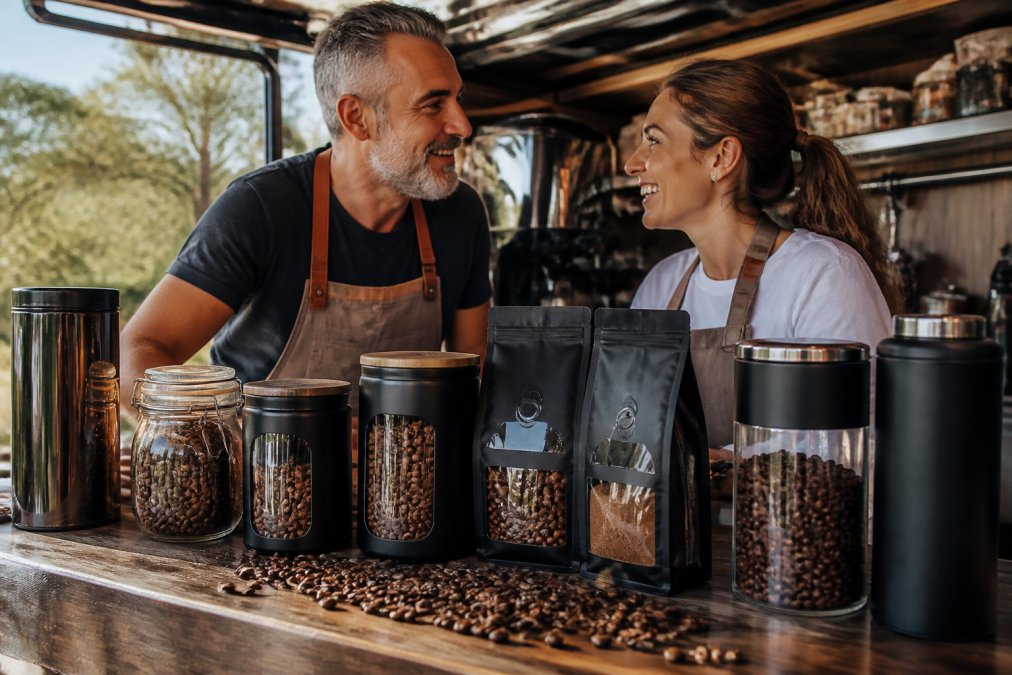
Glass and ceramic containers are inert and won't affect flavor. Plastic can leach chemicals into beans over time, especially if exposed to heat. Stainless steel is also safe and provides light protection.
The one-way valve is crucial. It allows carbon dioxide (the gas that builds up as beans age) to escape while preventing oxygen from entering. Beans release CO2 for several days after roasting. A one-way valve prevents pressure buildup and keeps oxygen out.
If your container doesn't have a one-way valve, it needs to seal completely airtight. Any air inside will eventually degrade the beans. Check the seal regularly. If it loosens, reseal it immediately.
Opaque vs. Clear Containers
Light is a major enemy of coffee freshness. Clear containers expose beans to light constantly. Opaque containers protect them.
Choose opaque containers whenever possible. If you use clear glass, store the container in a dark cabinet or cover it with an opaque bag. Never leave beans in a clear container on a counter or shelf where light hits them regularly.
Some people like clear containers for convenience, they can see how many beans are left. The trade-off is reduced freshness. If visibility matters to you, use a clear container but keep it hidden from light most of the time.
How Long Do Coffee Beans Stay Fresh
The shelf life of artisanal coffee beans depends on storage conditions and bean type. Understanding the timeline helps you buy the right amount and use beans at peak freshness.
The Brewing Window and Peak Freshness
Peak freshness occurs between 5-30 days after roasting. During this window, the beans have released enough CO2 to taste balanced, but the volatile compounds haven't degraded yet. This is when you get the most complex, vibrant flavors.
After 30 days, the flavor profile begins to flatten. The aroma diminishes. The brightness fades. This doesn't mean the coffee is bad, it's still drinkable for weeks longer. But it's no longer at its best.
Most specialty roasters print the roast date on the bag.
Whole Bean vs. Pre-Ground Shelf Life
Whole beans in an airtight container stay fresh for 2-4 weeks at room temperature. After that, oxidation gradually degrades the flavor. They're still usable for another 2-4 weeks, but quality declines noticeably.
Freezing Coffee Beans: Pros and Cons
Freezing extends shelf life significantly. But it comes with risks if done incorrectly.
When Freezing Makes Sense
Freezing slows oxidation and chemical reactions dramatically. Beans stored in the freezer can stay fresh for 3-6 months. This is useful if you buy in bulk, receive a subscription shipment you won't use immediately, or want to stockpile beans you love.
Avoiding Freezer Burn and Condensation
The main risk with freezing is condensation. When frozen beans warm up, moisture condenses on the surface. This moisture damages the beans and accelerates staling.
Room Temperature Storage: The Standard Approach
Most home coffee enthusiasts store beans at room temperature. It's simple, effective, and requires no special equipment.
How to Identify Stale Coffee and Protect Flavor
Stale coffee has telltale signs. Learning to spot them helps you catch degradation early.
Climate-Specific and Long-Term Storage Solutions
Storage needs vary by climate. Humid environments require different strategies than dry ones.
Frequently Asked Questions
What is the best way to store fresh coffee beans to keep them fresh?
Store artisanal coffee beans in an airtight container away from heat, light, moisture, and oxygen. Use an opaque vessel with a one-way valve to allow carbon dioxide from degassing to escape while preventing oxygen from entering. Keep beans at ambient temperature (around 60-70°F) in a cool, dark cupboard or pantry. Whole beans stay fresher longer than pre-ground coffee, maintaining peak flavor for 2-4 weeks after roasting.
How long do coffee beans stay fresh after opening?
Whole artisanal coffee beans remain at peak freshness for 2-4 weeks after opening the bag, with a broader brewing window extending to 4-6 weeks. Pre-ground coffee loses freshness much faster, typically within 1-2 weeks due to increased surface area exposure to oxygen. The exact timeline depends on your storage method, container quality, and ambient temperature. Check roast dates on your bag to track freshness from the beginning.
Should you store coffee beans in the freezer or pantry?
Room temperature storage in an airtight, opaque container is the standard choice for most artisanal coffee enthusiasts. Freezing works for long-term bulk storage (3-6 months), but requires careful handling to prevent condensation and freezer burn when thawing. If you freeze beans, keep them in an airtight container, thaw them unopened to room temperature, and avoid repeated freeze-thaw cycles. For regular consumption, a cool, dark pantry preserves flavor and aroma better than freezing.
Is it okay to store coffee beans in a Ziploc bag?
Standard Ziploc bags are not ideal for storing artisanal coffee beans because they do not prevent oxygen exposure effectively and may allow light to degrade flavor compounds. However, a Ziploc bag works temporarily (1-2 weeks) if you remove excess air before sealing and store it in a dark cupboard. For longer freshness, upgrade to an opaque airtight container with a one-way valve, which prevents oxidation while allowing carbon dioxide from degassing to escape naturally.
Storing artisanal coffee beans properly transforms your daily cup. The right container, location, and habits keep your beans fresh from roast day through the brewing window. When you buy premium beans from local roasters like laffogatocoffee.com, proper storage ensures you taste exactly what the roaster intended. Start with these fundamentals, monitor your storage conditions, and adjust based on your climate. Your morning coffee will thank you.