 blog
Alternatives to Expensive Espresso Machines: 2026 Guide
Table of Contents
- Why Expensive Espresso Machines Aren't Your Only Option
- Espresso Without an Espresso Machine: What's Actually Possible
- Manual Brewing Methods That Deliver Espresso-Like Results
- Pod-Based Coffee Makers and Entry-Level Machines
- Total Cost of Ownership: Beyond the Upfront Price
- Making Milk Drinks Without an Espresso Machine
- Maintenance, Durability, and Long-Term Value
- Choosing Your Alternative: Decision Framework
- Frequently Asked Questions
Last Updated: October 17, 2026
Why Expensive Espresso Machines Aren't Your Only Option
Not everyone needs to spend $500, $1,000, or more on an espresso machine to enjoy exceptional coffee at home, and alternatives to expensive espresso machines have evolved significantly to meet diverse needs and budgets. The truth is that alternatives to expensive espresso machines have evolved significantly, and many deliver results that rival machines costing three times as much.
The barrier to entry for espresso-style coffee has dropped considerably. Whether you're drawn to the ritual of manual brewing, the simplicity of pod systems, or the precision of entry-level machines, you have real options. Each path has distinct trade-offs: upfront cost, learning curve, milk-drink capability, and maintenance demands. Understanding these differences is what separates a regrettable purchase from one you'll actually use.
Espresso Without an Espresso Machine: What's Actually Possible
Can you make espresso without an espresso machine? The honest answer is nuanced. True espresso requires specific pressure, typically 9 bars, to force hot water through finely ground coffee, creating that characteristic crema and concentrated shot. Most home alternatives cannot replicate this pressure precisely. What they can do is produce concentrated, intensely flavored coffee that delivers the essence of an espresso experience.
Understanding Pressure and Extraction
Pressure and extraction are the core mechanics behind espresso. When hot water is forced through coffee grounds under pressure, it extracts oils and solids that create the rich, concentrated flavor profile espresso drinkers crave. Without adequate pressure, extraction becomes incomplete, resulting in weaker, less complex coffee.
The good news: you don't need 9 bars of pressure to enjoy concentrated coffee. Many alternatives deliver 3-5 bars of pressure or use immersion brewing, steeping grounds in hot water, to achieve similar flavor intensity. The difference in the final cup is real but often subtle for casual drinkers. Home baristas seeking true espresso will notice the distinction immediately; those simply wanting bold, concentrated coffee will find these alternatives entirely satisfying.
Manual Brewing Methods That Deliver Espresso-Like Results
Manual brewing methods put you in control. No electricity, no complicated settings, just you, hot water, coffee grounds, and a simple device. These approaches reward technique and consistency, and they're often the most affordable entry point into specialty coffee.
Moka Pot vs Espresso Machine: Stovetop Brewing Explained
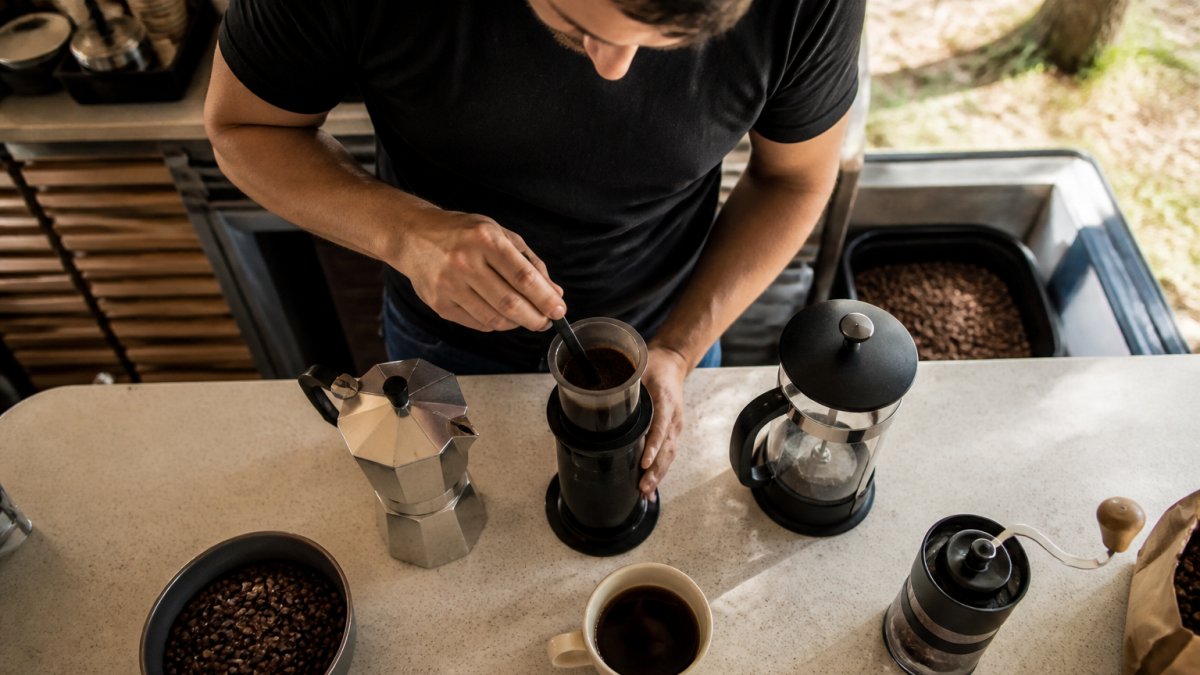
A moka pot vs espresso machine comparison reveals why stovetop brewing has endured for decades. The moka pot, also called a stovetop moka, uses steam pressure to force hot water through ground coffee, producing a concentrated brew that approximates espresso. It's simple, durable, and inexpensive to purchase and maintain.
How it works: fill the bottom chamber with water, add finely ground coffee to the filter basket, screw on the top chamber, and heat on the stove. As water heats, steam pressure builds and forces the coffee upward into the top chamber.
Moka pots excel at value and reliability. They require no electricity, last for years with basic care, and produce coffee that's rich enough for lattes and cappuccinos. The trade-off: they demand attention. You must monitor heat carefully to avoid burnt coffee or over-extraction.
AeroPress Espresso-Style Coffee: Compact and Portable
The AeroPress espresso-style coffee method uses air pressure and immersion brewing to create concentrated coffee in under two minutes.
The AeroPress consists of two cylinders, a plunger, and a paper or metal filter. You add finely ground coffee, pour hot water, let it steep briefly, then press down with force to push the coffee through the filter.
What makes it special: the AeroPress is forgiving and produces consistent results even for beginners. It's also compact and portable, ideal for travel, camping, or office use. Cleanup takes seconds. The learning curve is gentle, and experimentation yields interesting variations.
The limitation is that it produces smaller volumes than a moka pot, typically one to two servings per brew. For households of three or more, you'll need to brew multiple times.
French Press and Pour-Over for Concentrated Brews
A French press creates immersion-brewed coffee by steeping coarsely ground beans in hot water for four minutes, then pressing down a metal filter to separate grounds from liquid. The result is bold, full-bodied coffee with more body than paper-filtered methods.
While not technically espresso, French press coffee is concentrated and rich. It works well for milk drinks and provides excellent flavor when you use fresh, high-quality beans.
Pour-over brewing, using a cone dripper, Chemex, or flat-bottomed dripper, offers more control over extraction than French press. You pour hot water slowly over grounds, controlling flow rate and contact time. The result is cleaner than French press (paper filters trap fine particles) and more refined.
For espresso-like intensity, French press is your better choice. For clarity and precision, pour-over wins.
Pod-Based Coffee Makers and Entry-Level Machines
Pod systems and budget espresso machines represent the easiest entry into home espresso. They eliminate guesswork, require minimal technique, and deliver consistent results with almost no learning curve.
Pod-based makers use pre-packaged coffee capsules, each containing a precisely measured dose of ground coffee. You insert a pod, press a button, and receive an espresso-like shot in seconds. Popular systems include Nespresso and Keurig's espresso-compatible models. Advantages include speed, consistency, and minimal cleanup. The drawback: ongoing capsule costs and environmental waste from single-use pods.
Best Budget Espresso Machines Under $200
Entry-level espresso machines priced under $200 offer genuine espresso capability without the investment of premium models. Machines in this range typically feature basic pump systems, manual or semi-automatic operation, and simple steam wands for milk frothing.
What to expect: these machines produce legitimate espresso with decent crema and extraction. They're slower than high-end models and require more hands-on adjustment, but they genuinely work.
The trade-off is durability and refinement. Budget machines may develop leaks after a few years, steam wands can be finicky, and temperature stability isn't as precise as premium models. For someone testing whether they'll actually use home espresso regularly, a budget machine is a smart starting point.
Total Cost of Ownership: Beyond the Upfront Price
The initial purchase price tells only part of the story. Total cost of ownership includes ongoing expenses: replacement parts, maintenance, electricity, and consumables like filters or pods.
A manual brewing method like a moka pot or AeroPress requires minimal ongoing investment. After the initial $20-50 purchase, your costs are limited to replacement filters (a few dollars per year) and cleaning supplies.
Pod systems appear affordable upfront but accumulate costs quickly. A capsule-based machine might cost $150-300 initially, but each pod costs $0.50-1.00. A household using one pod daily spends $180-365 per year on pods alone.
Budget espresso machines require descaling solutions, occasional replacement gaskets, and electricity. Annual maintenance costs typically run $50-100, putting five-year ownership cost around $400-600 plus the machine itself.
Premium machines cost more upfront but often last longer, require fewer repairs, and maintain resale value better.
Making Milk Drinks Without an Espresso Machine
Many people want espresso-based milk drinks, lattes, cappuccinos, flat whites, but assume they need a full espresso machine to make them. That's not true. You can create excellent milk drinks with concentrated coffee from manual brewers or budget machines, plus a separate milk-frothing tool.
A handheld milk frother ($15-40) heats and froths milk using a whisk-like attachment powered by batteries. You brew concentrated coffee using your chosen method, froth milk separately, then combine them.
For better microfoam and milk texture, consider a manual milk frother or a small steam wand attachment designed for stovetop use. These produce creamier, more velvety milk than handheld frothers, though they require more technique.
The advantage of this approach: flexibility. You can brew concentrate with whichever method you prefer, then froth milk however you like. The disadvantage is that it requires more steps and more equipment than an all-in-one machine.
Maintenance, Durability, and Long-Term Value
How long will your brewing equipment last? Manual methods like moka pots and AeroPress are virtually indestructible. A quality moka pot lasts 10-15 years with basic care.
Pod machines are less durable. Electronics fail, heating elements wear out, and the machines typically last 3-5 years before requiring replacement. Budget espresso machines fall in the middle, 5-7 years with proper maintenance.
Repairability matters. Manual brewers have almost nothing to repair. Pod machines are difficult to service; most users discard them when they fail. Budget espresso machines can often be repaired, but replacement parts may be expensive or hard to find.
For long-term value, manual brewing methods win decisively. They cost less upfront, cost almost nothing to maintain, last for years, and remain functional even if neglected. The trade-off is that they require more hands-on effort than machines.
Choosing Your Alternative: Decision Framework
Selecting the right alternative depends on your priorities. Use this framework to narrow your options:
Budget-first buyers: Manual brewing methods (moka pot, AeroPress, pour-over) offer the lowest total cost of ownership over five years.
Speed and convenience prioritize: Pod-based systems deliver the fastest results with minimal technique required.
Milk drink enthusiasts: Moka pots excel at producing concentrated coffee for lattes and cappuccinos when paired with a handheld frother.
Portability matters: AeroPress is compact and travel-friendly; manual pour-over setups are equally portable.
Learning and experimentation: Manual methods reward technique development and offer the most flexibility for adjusting variables like grind size, water temperature, and brew time.
True espresso quality: Entry-level espresso machines under $200 produce legitimate espresso with crema and pressure-based extraction, even if not as refined as premium models.
| Priority | Best Option | Why | Annual Cost |
|---|---|---|---|
| Lowest cost | Moka pot | Durable, minimal maintenance | Under $20 |
| Speed | Pod system | Instant results, no technique | $200-400 |
| Milk drinks | Moka pot + frother | Concentrated coffee, flexible frothing | $30-50 |
| Portability | AeroPress | Compact, lightweight, durable | $15-25 |
| True espresso | Budget machine | Pressure-based extraction, real crema | $75-150 |
| Best value | Manual brewing | Low cost, high reliability, long lifespan | $20-50 |
The real insight here is that expensive espresso machines solve a problem many home coffee drinkers don't actually have.
The best coffee equipment is the one you'll actually use consistently. Whether that's a $30 moka pot or a $150 entry-level machine depends entirely on your priorities.
Frequently Asked Questions
Can you make espresso without an espresso machine?
Yes, but with important caveats. True espresso requires 9 bars of pressure, which manual methods cannot replicate. However, you can brew concentrated, espresso-like coffee using a moka pot, AeroPress, or French press. These methods produce rich, intense coffee suitable for milk drinks like lattes and cappuccinos, though the texture and crema will differ from machine-pulled espresso. The key is using a fine grind, proper dose ratios, and hot water.
How does a moka pot compare to an espresso machine?
A moka pot costs $25-$50 upfront versus $200+ for entry-level machines. It brews concentrated coffee on a stovetop but generates only 1-2 bars of pressure, not the 9 bars true espresso requires. Moka pots are durable, require minimal maintenance, and produce excellent milk-drink bases. The trade-off: slower brewing, less crema, and a learning curve for heat control. Total cost of ownership is lower because there's no descaling or electrical components to replace.
Is an AeroPress a good alternative to an espresso machine?
An AeroPress ($30-$40) excels at brewing concentrated, smooth coffee quickly. It uses manual pressure (you apply it by hand), so it won't match true espresso extraction, but the result works well in milk drinks. Advantages include portability, ease of cleaning, and consistency. Disadvantages: you need a good burr grinder, the brewing technique has a learning curve, and you cannot brew large quantities at once. Best for single servings or small batches.
What's the real difference in total cost between alternatives and expensive espresso machines?
Entry-level espresso machines ($200-$400) require descaling supplies, replacement gaskets, and occasional repairs. Manual methods (moka pot, AeroPress, French press) cost $25-$50 with minimal maintenance beyond regular cleaning. Over five years, manual brewing saves $300-$500 in upkeep and replacement parts. The trade-off: more hands-on effort per cup and no true espresso. If you brew daily, the time investment in manual methods may outweigh the cost savings for some users.