 ultimate-guide
Best Italian Coffee Brewing Methods: A 2026 Guide
Table of Contents
- What Makes Italian Coffee Brewing Different
- How to Use a Moka Pot Correctly
- Best Coffee Beans for Italian Espresso
- Traditional vs. Modern Italian Brewing Methods
- Italian Coffee Culture and Etiquette
- Water Quality and Temperature Management
- Grind Size Calibration for Specific Italian Methods
- Troubleshooting Common Brewing Mistakes
- Frequently Asked Questions
Last Updated: September 27, 2026
What Makes Italian Coffee Brewing Different
Italian coffee brewing methods prioritize intensity, body, and ritual. Unlike filter-based approaches, they extract concentrated, full-bodied shots with rich crema and bold flavor through specific equipment, grind size, water temperature, and the cultural expectation that coffee is consumed quickly, often standing at a bar with a pastry.
The core principle is pressure. Whether using a stovetop Moka pot or modern espresso machine, the goal is to force hot water through finely ground coffee at high pressure, creating distinctive crema and concentrated flavors. This differs fundamentally from immersion brewing (French press) or gravity-based brewing (pour-over), where water passes through grounds more gently.
In Italy, coffee is a quick, intense experience, a double shot, perhaps a pastry, then done. This cultural context shapes equipment design and preparation methods, determining both taste and how you interact with your morning.
How to Use a Moka Pot Correctly
The Moka pot is the closest thing to authentic Italian espresso at home without expensive equipment. The Bialetti Moka Express is the gold standard, producing concentrated, espresso-like coffee with signature crema and bold body by forcing steam pressure through ground coffee.
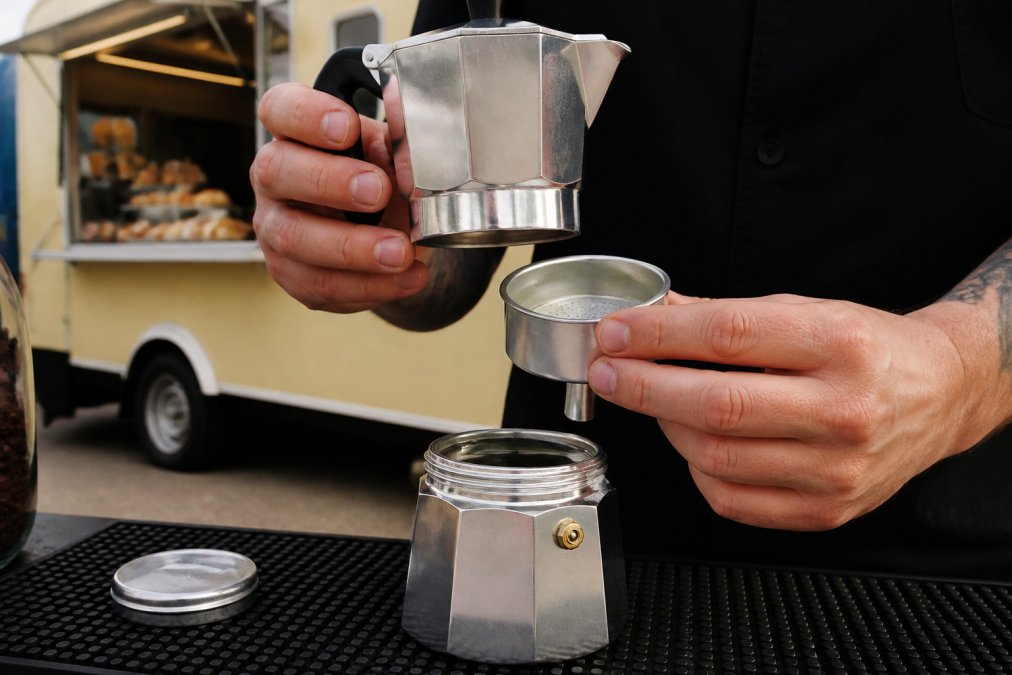
Step-by-Step Brewing Process
-
Fill the bottom chamber with water up to the safety valve line using cold, filtered water. Never overfill; the valve needs room to function.
-
Add finely ground coffee to the filter basket at a consistency slightly finer than table salt. Fill level with the top, but don't tamp; compression creates uneven extraction.
-
Screw the top chamber onto the bottom with hand-tightening only to avoid damaging the seal.
-
Place on medium heat using a burner matching the pot's diameter. Listen for hissing, your signal that pressure is building.
-
Wait for the gurgling sound (usually 5-8 minutes), signaling coffee flowing into the top chamber.
-
Remove from heat immediately, The moment the gurgling becomes a loud hiss, pull the pot off the stove. The residual heat will continue extraction, and you don't want over-extraction, which tastes bitter and burnt.
-
Pour into a small cup, Italian coffee is meant to be consumed quickly, usually within a minute of brewing. The crema will start to dissipate if you wait too long.
Common Mistakes to Avoid
The biggest error is preheating water, which accelerates brewing unevenly and causes inconsistent extraction. Always start with cold water.
Grinding too coarse prevents proper pressure buildup. If coffee is watery or weak, grind finer; grounds should feel like fine sand.
Don't tamp the coffee; compression creates uneven water flow and inconsistent extraction. Let grounds sit naturally.
Remove the pot from heat the moment the gurgle becomes a hiss; prolonged heat burns the coffee and destroys bean nuance.
Best Coffee Beans for Italian Espresso
Italian espresso traditionally uses dark roast blends combining robusta and arabica beans for body, crema, and bold flavor. The best choice depends on your equipment and preference.
For a Moka pot, you want beans roasted specifically for espresso. Look for bags labeled "espresso roast" or "Italian roast." These beans have been roasted longer, developing oils on the surface and creating that darker color. The roast profile matters because it affects how the beans respond to the high-pressure extraction of the Moka pot method.
Bean freshness is critical.
Laffogatocoffee.com sources beans specifically chosen for Italian brewing methods.
Traditional vs. Modern Italian Brewing Methods
Manual Machines and Stovetop Brewers
The Moka pot, invented in 1933, remains Italy's most common home brewer. It requires no electricity or filters and produces concentrated, espresso-like coffee, but demands attention during brewing.
Contemporary Equipment for Home Baristas
Modern espresso machines like the Breville Barista Express offer PID temperature control, integrated grinders, and consistent pressure for technically superior extraction, but cost significantly more and require more maintenance.
Italian Coffee Culture and Etiquette
In Italy, coffee is social and quick: order at the bar, stand, drink in one or two sips, and leave. Sitting costs more. This shapes how coffee is consumed and prepared.
Water Quality and Temperature Management
Mineral Content and Its Impact on Extraction
Water chemistry matters more than most home brewers realize. The mineral content, specifically calcium and magnesium, affects how coffee extracts. Hard water (high mineral content) can lead to scale buildup in your equipment and can actually improve extraction by helping carry flavors. Soft water extracts too quickly, sometimes producing weak or sour coffee.
Achieving Proper Temperature Without PID Controllers
Without an expensive PID-controlled espresso machine, you're managing temperature through heat and timing. For a Moka pot, this means using medium heat consistently and learning the sound and timing of your specific setup. Every stove is different, so your first few brews are calibration runs.
Grind Size Calibration for Specific Italian Methods
Grind size is the single most important variable you control in Italian coffee brewing. Too coarse and your coffee is weak and sour. Too fine and it's bitter and over-extracted. For a Moka pot, you're aiming for a consistency between espresso-fine and drip-coffee-coarse, think fine sand.
| Method | Grind Size | Consistency Feel | Extraction Time |
|---|---|---|---|
| Moka Pot | Fine | Fine sand | 5-8 minutes |
| Manual Machine | Very Fine | Powder-like | 25-30 seconds |
| AeroPress | Medium-Fine | Table salt | Under 2 minutes |
| French Press | Coarse | Breadcrumbs | 4 minutes |
Troubleshooting Common Brewing Mistakes
Weak, watery coffee usually means your grind is too coarse or your extraction time is too short. Move your grind finer and listen for that full gurgle before removing from heat. If you're using a Moka pot, also check that you're filling the water chamber to the safety valve line, underfilling reduces pressure.
Frequently Asked Questions
Is moka pot coffee as strong as espresso?
Moka pot coffee is concentrated and bold, but not technically espresso. True espresso requires 9 bars of pressure; moka pots generate only 1-2 bars. The result is a strong, dark brew similar in intensity and flavor profile to espresso, making it an excellent home alternative. Many coffee enthusiasts consider moka pot coffee the closest stovetop method to authentic espresso extraction without a dedicated machine.
What are the most common coffee brewing methods used in Italy?
The moka pot dominates Italian home brewing, prized for its simplicity and ability to produce concentrated coffee. In cafés, automatic espresso machines are standard. For everyday coffee, Italians often use pre-ground coffee in moka pots or order at the bar. Manual machines and pour-over methods are less common in traditional Italian culture, though contemporary home baristas now experiment with diverse brewing techniques to highlight specialty roast profiles.
How do you achieve the perfect crema on Italian-style coffee?
Crema forms when hot water forces through finely ground coffee under pressure, emulsifying oils and creating a golden-brown layer. For moka pots, use a dark roast with fine, consistent grind size and tamp gently. Ensure your water is hot (not boiling) and fill the boiler to the safety valve line. Freshly roasted beans with higher oil content produce thicker crema. Proper tamping pressure and extraction timing are critical, pull the moka from heat when you hear a gentle gurgling sound.
What is the difference between a moka pot and a true espresso machine?
Espresso machines use electric pumps to generate 9+ bars of pressure, while moka pots rely on steam pressure (1-2 bars) from a stovetop. Espresso machines offer temperature control, pressure gauges, and consistency across shots. Moka pots require manual monitoring and produce a concentrated brew that mimics espresso flavor but lacks the crema density and body of true espresso. For home brewers seeking authenticity without investment, moka pots deliver excellent results; serious espresso enthusiasts prefer dedicated machines.
Are there specific coffee bean roasts best suited for Italian brewing methods?
Dark and medium-dark roasts are traditional for Italian brewing, chosen for their bold body, lower acidity, and rich bitterness that pairs with milk in cappuccino and caffè. These roasts develop oils that create crema. However, modern Italian coffee culture embraces medium roasts and single-origin specialty beans to highlight origin characteristics. Choose beans based on your preference: dark roasts for classic strength, medium roasts for balanced flavor, and always verify the roast date to ensure freshness.
How do you properly clean and maintain Italian coffee brewing equipment?
After each use, disassemble your moka pot and rinse all components with hot water, never use soap, as it removes protective oils and affects future brews. Dry thoroughly to prevent corrosion. For espresso machines, backflush the group head regularly and soak the portafilter and basket weekly. Descale monthly using a commercial descaling solution to remove mineral buildup from water. Store equipment in a dry place. Proper maintenance extends equipment life and ensures consistent, quality coffee extraction.
What grind size should I use for a moka pot?
Moka pots require a fine, consistent grind, finer than pour-over but coarser than true espresso. The grind should feel like powdered sugar. Too coarse results in weak, under-extracted coffee; too fine causes over-extraction and bitter flavors. Burr grinders (conical or flat) produce consistent particle size better than blade grinders. Experiment within the fine range to match your specific moka pot model and water hardness, adjusting until you achieve balanced body and aroma without excessive bitterness.
Does water quality really affect Italian coffee brewing?
Yes, water quality significantly impacts extraction and flavor. Hard water with high mineral content (limestone, calcium) can clog equipment and produce bitter coffee, while distilled water lacks minerals needed for proper extraction. Ideally, use filtered water with moderate mineral content (150-250 ppm) to balance extraction and equipment longevity. If your tap water is very hard, a simple pitcher filter improves results. Water temperature also matters, use water heated to 195-205°F for optimal extraction in moka pots and manual brewers.