 listicle
Best Italian Pastry and Coffee Pairings
Table of Contents
- Italian Breakfast and Coffee Traditions
- Espresso and Pastry Pairings: The Foundation
- Cappuccino and Pastry Pairings for Morning
- Pastries to Dip in Coffee: Texture and Flavor
- Italian Cookies to Eat with Coffee
- Best Coffee for Cannoli and Other Sicilian Treats
- Regional Italian Pairings and Flavor Principles
- Creating Authentic Italian Pairings at Home
- Frequently Asked Questions
Last Updated: October 5, 2026
Italian Breakfast and Coffee Traditions
The morning ritual of pairing coffee with pastry isn't just breakfast in Italy, it's a cultural cornerstone.
This isn't random. Italian coffee culture has developed specific pairings over centuries, each rooted in flavor balance and texture contrast. At laffogatocoffee.com, we specialize in Italian pastry and coffee.
The foundation of Italian breakfast rests on two principles. First, coffee should cut through richness, not amplify it. Second, pastry should complement the coffee's intensity, not compete with it.
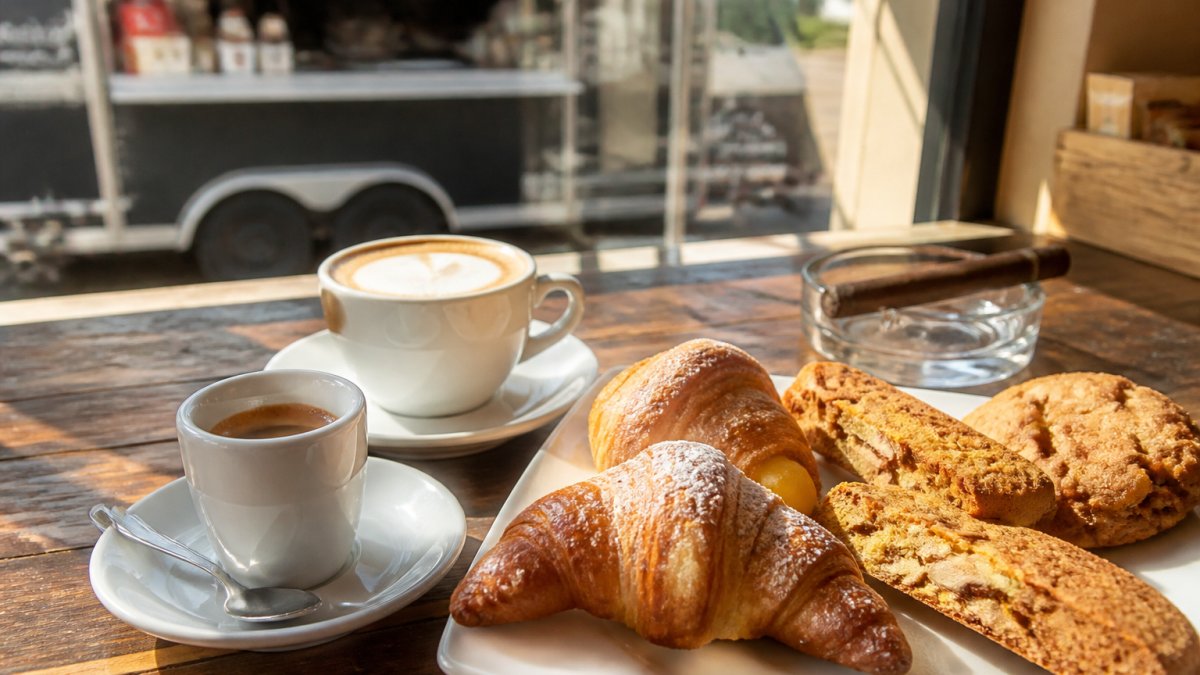
What makes Italian pairings different from what you might find elsewhere? Italians treat breakfast as a moment of balance rather than indulgence. A delicate cornetto pairs with strong espresso because the coffee's bitterness softens the pastry's sweetness.
Most Americans approach this backwards. They assume sweet pastries need sweet coffee drinks. Italian tradition says the opposite: sweet pastry needs bitter, concentrated coffee. This single shift in thinking changes everything about how you build best italian pastry and coffee pairings at home.
Espresso and Pastry Pairings: The Foundation
Espresso is the anchor of Italian breakfast. A proper shot, concentrated, bold, slightly bitter, serves as the counterweight to almost every pastry. The intensity cuts through richness and prevents flavor fatigue after a few bites.
Why espresso works so well comes down to chemistry and tradition. Espresso's high extraction rate produces compounds that coat your palate and prepare it for sweetness. When you take a bite of pastry after espresso, your taste buds reset.
The best espresso and pastry combinations follow a simple rule: darker roasts with richer pastries, lighter roasts with delicate ones. A dark roast espresso has smoky, chocolate-forward notes that complement dense, cream-filled pastries.
Temperature matters too. Italians drink espresso hot and fast, usually in one or two pulls. The heat amplifies the coffee's impact and prevents the pastry from becoming soggy during the pairing. Lukewarm espresso loses its cutting power, the pastry's sweetness overwhelms instead of balances.
Here's what most guides miss: the best pairing isn't about matching flavor families. It's about creating contrast. A buttery cornetto with sharp espresso works because they're opposites. Rich meets intense. Soft meets bold. That tension is what makes the combination memorable.
Cappuccino and Pastry Pairings for Morning
Cappuccino represents a different approach to best italian pastry and coffee pairings. Where espresso cuts, cappuccino complements. The milk softens the coffee's edges and adds sweetness, which means the pastry can be lighter, more delicate.
A traditional cappuccino, one-third espresso, two-thirds steamed milk, creates a creamy, balanced drink. This isn't a vehicle for flavor; it's a partner. The milk's natural sweetness plays against pastry without overwhelming it. A light, flaky cornetto becomes the star instead of fighting for attention.
Cappuccino pairs best with pastries that have structure and subtle sweetness. Biscotti work beautifully because their density holds up to the milk's creaminess. Pizzelle, thin and crisp, become almost ethereal when dunked briefly in cappuccino.
Avoid pairing cappuccino with heavily filled pastries. Cream-laden sfogliatella or chocolate-stuffed cannoli become too rich when combined with milk-based coffee. The combination loses balance. Italians instinctively reach for espresso in these moments, not cappuccino.
Temperature and timing shape the experience. Cappuccino should be hot enough to warm the pastry when you alternate bites and sips. A lukewarm cappuccino produces a tepid, unsatisfying combination. The ritual requires heat and intention.
Pastries to Dip in Coffee: Texture and Flavor
Dunking pastry in coffee is an art form in Italy, not a casual habit. The goal isn't to soak, it's to soften the exterior while maintaining structure. A two-second dip, sometimes three, is all that's needed. Longer, and the pastry dissolves into mush.
The best candidates for dunking share specific properties: they're dense enough to hold together when wet, but porous enough to absorb flavor. They're not too sweet on their own, so the coffee's bitterness creates balance. They're shaped for easy handling, small enough to fit in your mouth comfortably.
Texture contrast becomes crucial here. A crispy pastry dunked in hot liquid develops a soft exterior while the interior stays firm. That textural journey, from crunch to cream, is part of the pleasure. Pastries that are uniformly soft or uniformly hard don't create this dynamic.
Biscotti and the Art of Dunking
Biscotti is the dunking pastry. Twice-baked, hard, and intentionally designed for coffee immersion, biscotti represents centuries of Italian breakfast optimization. The pastry's density means it can handle a full dunk without falling apart.
A traditional almond biscotti pairs perfectly with espresso. The nuts add richness and texture, while the coffee's bitterness prevents the combination from becoming cloying. A two-second dip softens the surface just enough. The first bite delivers a moment of contrast: soft exterior, firm interior, bitter coffee, subtle sweetness.
Chocolate biscotti works similarly, though the cocoa adds richness. Pair it with a darker roast espresso to avoid flavor overlap. The coffee's intensity keeps the chocolate from dominating.
Pizzelle and Delicate Dips
Pizzelle, thin, waffle-like cookies pressed in decorative irons, demand a gentler approach. These pastries are delicate by design. A one-second dip in hot cappuccino is often enough. The milk softens them without destroying their structure.
Pizzelle's appeal lies in simplicity. Usually flavored with vanilla or anise, they're not competing for attention. They're vehicles for the coffee experience. A vanilla pizzelle with cappuccino creates an almost meditative pairing, subtle, balanced, comforting.
The texture transformation is remarkable. A crispy pizzelle becomes tender after a brief dip, almost melting on your tongue. This is why timing matters. Too long, and you lose the textural contrast that makes the experience interesting.
Italian Cookies to Eat with Coffee
Beyond dunking, many Italian cookies are designed to accompany coffee without immersion. These are eaten between sips, creating a rhythm: coffee, bite, coffee, bite. The pattern keeps both flavors fresh.
Amaretti, almond macarons with a crisp exterior and chewy center, pair beautifully with any espresso-based drink. The almond's subtle bitterness echoes the coffee's profile. A dark roast espresso with amaretti creates a sophisticated, almost austere combination.
Biscotti's softer cousins, like cantuccini, work similarly. These twice-baked cookies have less density than traditional biscotti, making them easier to eat without dunking. Pair them with cappuccino for a gentler morning experience.
Pizzelle, mentioned earlier, also shine when eaten dry alongside coffee. The contrast between the pastry's delicate crispness and the coffee's heat creates a pleasant sensory experience.
Best Coffee for Cannoli and Other Sicilian Treats
Cannoli represent a different category of pairing. These pastries, crispy tubes filled with sweet ricotta cream, are richer and more indulgent than morning pastries. They demand strong, concentrated coffee to maintain balance.
Espresso is the only choice here. A double shot of dark roast espresso cuts through the cannoli's richness without hesitation. The coffee's bitterness prevents the combination from becoming overwhelming. Italians don't pair cannoli with cappuccino or milk-based drinks. The milk would add another layer of richness, tipping the balance toward excess.
The timing of cannoli consumption matters. Italians typically eat cannoli as an after-dinner treat or mid-afternoon indulgence, not at breakfast. This positioning reflects the pairing's intensity. Breakfast demands restraint; cannoli demand boldness.
Other Sicilian treats like granita, a semi-frozen dessert, pair differently. A hot espresso poured over granita creates affogato, a classic Italian dessert. The contrast between hot and cold, bitter and sweet, is intentional and celebrated.
Regional Italian Pairings and Flavor Principles
Italy's regional diversity extends to coffee and pastry combinations. Northern Italy favors delicate pairings with lighter roasts. Southern Italy embraces bolder combinations with darker, more intense espresso. Understanding these regional preferences reveals the logic behind best italian pastry and coffee pairings.
Cornetto and Coffee Across Italy
The cornetto, Italy's answer to the croissant, appears everywhere, but regional preferences shape how it's paired. In Milan, a cornetto with cappuccino is standard breakfast. The pastry's buttery richness complements the milk's creaminess perfectly.
In Naples, the same cornetto might pair with espresso. The southern preference for stronger coffee means the pastry's sweetness needs a more intense counterweight. This isn't a better pairing, it's a different one, rooted in regional coffee culture.
A plain cornetto (cornetto vuoto) is the most versatile. It pairs with espresso, cappuccino, or even macchiato. The pastry's butter and sugar are subtle enough to complement almost any coffee preparation.
Sfogliatella and Strong Espresso
Sfogliatella, a Neapolitan pastry with crispy, paper-thin layers and a ricotta filling, is one of Italy's most complex pastries. It demands equally complex coffee. A strong, dark roast espresso is the only pairing that works.
The sfogliatella's layers create textural complexity. Each bite combines crispy shell with creamy interior. Weak coffee can't compete. The pastry overwhelms. Strong espresso cuts through, balances, and makes the combination memorable.
A sfogliatella is rarely eaten at breakfast. It's an afternoon or evening treat, paired with concentrated coffee. The combination is too rich for morning, too intense for casual consumption.
Maritozzo and Creamy Coffee Drinks
Maritozzo, a soft, sweet roll filled with whipped cream, represents indulgence. This Roman pastry pairs best with milk-based coffee drinks. The cream inside the pastry echoes the milk in cappuccino or macchiato, creating harmony rather than contrast.
A macchiato, espresso "marked" with a small amount of milk, is the ideal pairing. The coffee's intensity prevents the combination from becoming cloying. The milk softens the edges just enough. It's a balanced approach to a rich pastry.
Maritozzo isn't everyday breakfast. It's a special-occasion treat, eaten slowly, savored. The pairing reflects this intentionality.
Creating Authentic Italian Pairings at Home
Building best italian pastry and coffee pairings at home requires understanding a few principles. First, source quality matters.
Start with the basics. Buy espresso beans from a specialty roaster, someone who understands Italian coffee culture and roasts accordingly.
Invest in basic equipment. A manual espresso maker or a simple moka pot produces concentrated coffee without requiring expensive machinery.
Practice the pairing ritual. Don't rush. Sit down, pour your coffee, arrange your pastry on a plate, and pay attention. Notice how the flavors interact.
Start with simple pairings before advancing to complex ones. A cornetto with cappuccino is forgiving.
Experiment with timing. Try dunking a biscotti for one second, then two, then three. Notice how each duration changes the experience.
Temperature control shapes the experience more than most people realize. Hot coffee paired with room-temperature pastry creates one experience.
Document what works. Keep notes on combinations you enjoy. Record the coffee's roast level, the pastry's type, and how you prepared it. Over time, patterns emerge.
Building the perfect best italian pastry and coffee pairings at home starts with understanding Italian principles, not copying Italian recipes.
Frequently Asked Questions
What are some good Italian cookies to eat with coffee?
Biscotti, pizzelle, and amaretti are classic Italian cookies paired with coffee. Biscotti are twice-baked almond or chocolate cookies designed for dunking in espresso or cappuccino. Pizzelle are thin, crispy waffle cookies with a delicate flavor that complements lighter roasts. Amaretti, made from almonds, offer a subtle sweetness that balances bold espresso without overwhelming the palate. Each cookie's texture and flavor profile creates a distinct experience with different coffee styles.
Which coffee pairs best with cannoli?
Espresso or a strong, dark roast coffee pairs best with cannoli. The pastry's sweet, creamy ricotta filling and crispy shell benefit from the bold bitterness and richness of dark roast espresso. The coffee's intensity cuts through the cannoli's sweetness and prevents palate fatigue. A medium-dark roast with chocolatey or nutty notes complements the traditional almond or pistachio flavors often found in authentic cannoli.
What pastries are good to dip in coffee?
Biscotti and pizzelle are ideal for dipping because their dense, slightly dry structure absorbs coffee without falling apart. Biscotti, the traditional Italian choice, soften perfectly in hot espresso within seconds. Pizzelle offer a more delicate dip experience. Avoid soft pastries like croissants or sfogliatella, which disintegrate quickly. The key is choosing pastries with enough structural integrity to hold up to brief immersion while absorbing flavor from the coffee.
Should you pair Italian pastries with espresso or cappuccino?
The choice depends on the pastry and time of day. Espresso pairs with heavier, sweeter pastries like cannoli and sfogliatella because its intensity balances rich fillings. Cappuccino, with its creamy milk component, works better with lighter pastries like cornetto and croissants, especially at breakfast. Morning pastries tend to pair with cappuccino's warmth and smoothness, while afternoon or dessert pastries benefit from espresso's bold character. Consider the pastry's texture and filling when deciding.