 how-to
How to Make Authentic Italian Affogato
Table of Contents
- What Is an Affogato?
- The Historical Context of Affogato
- Essential Ingredients for Authentic Affogato
- Best Coffee Beans for Affogato
- How to Pull a Perfect Shot of Espresso
- Gelato vs Ice Cream for Affogato
- Step-by-Step Preparation and Temperature Science
- Equipment Alternatives and Serving Suggestions
- Frequently Asked Questions
Last Updated: September 20, 2026
What Is an Affogato?
An affogato is a simple Italian dessert made by pouring a hot shot of espresso over a scoop of gelato or ice cream. The name comes from the Italian word "affogare," which means "to drown." When you pour the espresso over the cold gelato, the heat causes the gelato to melt slightly, creating a rich, creamy mixture with layers of flavor and texture.
The hot espresso creates a specific texture and mouthfeel by softening the gelato just enough to blend while maintaining some structure, something you can't achieve any other way.
The Historical Context of Affogato
The affogato emerged in Italy during the 1960s as a popular after-dinner treat in Italian cafés and restaurants.
It solved a practical problem: Italians wanted something quick, elegant, and satisfying after a meal, requiring only two ingredients and seconds to prepare.
Authenticity lies in simplicity: the quality of your espresso and gelato determines everything when making authentic italian affogato at home.
Essential Ingredients for Authentic Affogato
Making authentic italian affogato requires two core ingredients: espresso and gelato. Quality determines whether your affogato tastes exceptional or ordinary.
Espresso must be freshly roasted, high-quality beans with a rich crema layer and bittersweet flavor, never burnt or overly acidic. Gelato has less fat and air than ice cream, creating denser, more intense flavor from quality ingredients stored at proper temperature.
Beyond these two, you might add:
- A pinch of sea salt to enhance sweetness
- Shaved chocolate or cacao powder for garnish
- A drizzle of liqueur like amaretto for extra richness
- Fresh vanilla bean for aromatic depth
The key is restraint. Authentic affogato doesn't need many additions. The espresso and gelato should be the stars.
Best Coffee Beans for Affogato
Choose medium to dark roasted beans with bittersweet and chocolatey notes that produce thick, dark brown crema, indicating proper extraction and good quality.
Blends often work better than single-origin beans because they balance acidity, body, and sweetness to complement gelato. Use beans roasted within two to four weeks; check the roast date on the bag.
How to Pull a Perfect Shot of Espresso
Pulling a perfect shot of espresso is the technical heart of making authentic italian affogato. Here's what matters:
Grind size should feel like sand, not flour. If espresso pulls under 20 seconds, grind is too coarse; over 35 seconds, too fine. Tamping pressure should be firm and level at about 30 pounds, creating a compact, even puck.
Water temperature should be 195-205°F. Extraction time should be 25-30 seconds for both single and double shots; timing matters more than volume.
The result should have thick, persistent crema, smell rich and slightly sweet, and taste bittersweet with chocolate or nut notes, never harsh or burnt.
Gelato vs Ice Cream for Affogato
Gelato and ice cream are not interchangeable in affogato, and understanding why requires looking beyond fat content to how each behaves under heat and how flavor compounds interact.
Gelato (4-9% fat, 20-30% overrun) melts faster and more uniformly than ice cream (14-25% fat, 50% overrun). Ice cream's higher fat content creates separated layers rather than the integrated, creamy texture authentic affogato demands.
Gelato's lower fat content breaks down readily when hot espresso contacts it, allowing proper blending. Ice cream's fat insulates, creating a greasy film and separated texture rather than the ideal balance of soft, partially melted gelato suspended in espresso.
Gelato's denser structure concentrates flavor compounds, making pairing critical: vanilla bean with medium-dark roast, hazelnut/pistachio with dark roast, cacao/chocolate with medium roast, and stracciatella with single-origin espresso.
Ice cream's fat coats your palate, muting flavor interactions. Gelato allows both flavors to remain distinct yet integrated.
Ice cream is acceptable if gelato is unavailable, but expect a creamier, less balanced dessert. If you must use it, choose lower fat content (12-14%), serve in a chilled bowl, and use hotter espresso (205°F) to compensate.
The authenticity factor:
In Italy, affogato is made with gelato, period. This isn't tradition for tradition's sake, it's because gelato produces the specific texture and flavor balance the dessert requires. If you're aiming for authentic affogato, gelato is non-negotiable.
Step-by-Step Preparation and Temperature Science
Making authentic italian affogato is straightforward, but technique matters.
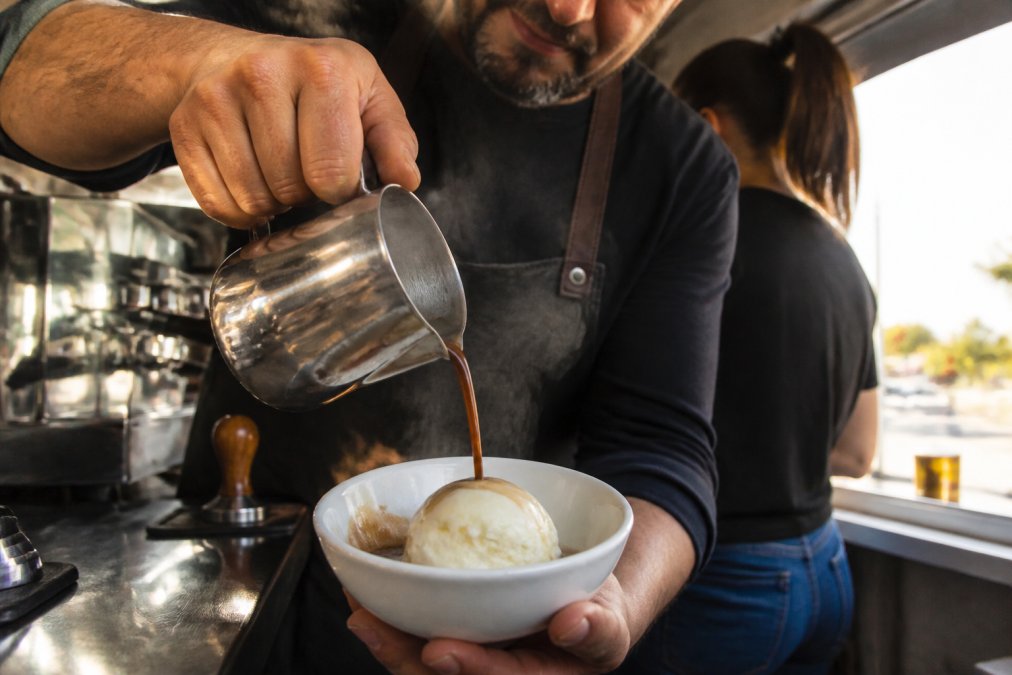
Step 1: Warm your bowl with hot water, then empty it. Step 2: Place one 2-ounce scoop of gelato in the bowl. Step 3: Pull your espresso shot immediately, timing is critical. Step 4: Pour the espresso slowly from 2 inches above the bowl. Step 5: Serve immediately while espresso is hot and gelato is partially frozen.
The temperature science is why affogato tastes the way it does. The hot espresso (around 200 degrees) meets the frozen gelato (around 0 degrees). This creates a dramatic temperature gradient. The outer layer of gelato melts first, creating a creamy liquid that mixes with the espresso. The center stays partially frozen, giving you texture variation in every spoonful. The heat of the espresso also brings out aromatic compounds in the gelato that you might not notice if you ate it cold.
Equipment Alternatives and Serving Suggestions
Making Affogato Without an Espresso Machine
Not everyone has access to an espresso machine, but you can still make a legitimate affogato using alternative brewing methods. The key is understanding what each method produces and how it differs from true espresso.
Moka pot (stovetop espresso maker):
A Moka pot brews strong coffee under pressure by heating water in a lower chamber until steam forces it through ground coffee and into an upper chamber. The result is concentrated but not true espresso, it lacks the 9 bars of pressure an espresso machine produces.
How to use it for affogato:
- Fill the bottom chamber with cold water just below the safety valve.
- Add finely ground coffee (espresso grind) to the basket, leveling it without tamping hard.
- Screw the top chamber on tightly.
- Heat over medium until you hear a steady hissing sound (about 5-7 minutes for a 3-cup Moka pot).
- Remove from heat immediately when the hissing becomes loud; the coffee is ready.
- Pour the hot coffee over gelato right away.
Trade-off: Moka pot coffee is stronger than drip coffee but less intense than espresso. The crema will be minimal or absent. The affogato will taste good but slightly less rich than the espresso version. Use a darker roast to compensate for the lower extraction pressure.
AeroPress (inverted method):
The AeroPress can produce a concentrated coffee if you use the inverted brewing method and very hot water. This method gives you more control over extraction time than a Moka pot.
How to use it for affogato:
- Invert the AeroPress so the plunger is at the top.
- Add a paper filter to the basket and rinse it with hot water.
- Add 18-20 grams of finely ground coffee (espresso grind).
- Pour water heated to 205°F until the chamber is nearly full.
- Stir gently for 10 seconds.
- Let it steep for 30 seconds.
- Flip the AeroPress onto your cup and press slowly for 20-30 seconds.
Trade-off: AeroPress produces a clean, concentrated cup with good body.
French press (last resort):
A French press is not ideal for affogato because it produces a full-immersion brew that's less concentrated than espresso. However, if it's your only option:
- Use a very fine grind (finer than you'd normally use for French press).
- Use a 1:2 coffee-to-water ratio by weight (e.g., 25 grams coffee to 50 grams water).
- Brew for 4 minutes, then press.
- Pour immediately over gelato.
Pour-over (Chemex, V60, Kalita Wave):
Pour-over methods produce a clean, bright cup but are not concentrated enough for traditional affogato. If you choose this route:
- Use an espresso grind (finer than standard pour-over).
- Use a 1:2 coffee-to-water ratio.
- Pour slowly and let it drip directly into a preheated cup or bowl.
- Pour the hot coffee over gelato immediately.
Serving Suggestions and Presentation
How you serve affogato affects both the experience and the final texture. These details matter.
The vessel:
The spoon:
Timing and pacing:
Accompaniments:
- Water: Serve a small glass of room-temperature or cold water on the side to cleanse your palate between spoonfuls.
- Cookie or biscuit: A small, crispy biscuit (like a ladyfinger or amaretti) on the side complements the affogato without overwhelming it.
- Digestif glass: If serving affogato after dinner, offer a small glass of amaro or another digestif liqueur. In Italy, affogato is often followed by a digestif, not accompanied by one.
Temperature and environment:
Plating for presentation:
Frequently Asked Questions
What is the difference between gelato and ice cream in an authentic affogato?
Gelato has a higher fat content and denser texture than ice cream, which allows it to maintain its structure longer when hot espresso is poured over it. Traditional Italian affogato uses gelato because its creamier mouthfeel and richer flavor complement the intensity of espresso better. Ice cream melts faster and becomes watery, diluting the coffee's bittersweet character. For an authentic experience, gelato is the correct choice.
What makes the best coffee beans for affogato?
The best coffee beans for affogato are medium to dark roasts with balanced acidity and rich body. Look for beans labeled with a recent roast date to ensure freshness. Italian espresso blends work well because they're designed to cut through the creamy sweetness of gelato. Single-origin beans with notes of chocolate, hazelnut, or cacao also pair beautifully. Quality matters: fresh-roasted beans from specialty roasters produce better extraction and flavor than older commercial blends.
How do I pull a perfect shot of espresso for affogato?
A perfect espresso shot requires proper grind consistency, tamping pressure, and extraction time. Grind your beans to a fine powder, tamp evenly with about 30 pounds of pressure, and pull a 1 to 1.5 ounce shot in 25-30 seconds. The result should be dark, syrupy, and topped with a thin layer of crema. Temperature matters: your espresso machine's group head should be between 195-205°F. Serve the shot immediately after extraction for maximum intensity and aroma.
Why is temperature balance so important in affogato?
Temperature balance determines the final texture and flavor experience. The hot espresso (around 200°F) must be poured immediately over cold gelato (around 0°F) to create the ideal melt rate. If the espresso cools too much before pouring, the gelato won't melt evenly and the drink becomes grainy. If the gelato is too warm, it melts too quickly into a soup. The contrast between hot and cold creates the signature creamy, slightly melted consistency that defines authentic affogato.