 how-to
What Is the 15-15-15 Coffee Rule? A Freshness Guide
Last Updated: November 1, 2026
Quick Summary
The 15-15-15 coffee rule is a freshness guideline: green beans stay good for up to 15 months after harvest, roasted beans peak within 15 days of roasting, and ground coffee should be brewed within 15 minutes of grinding. It describes freshness, not brew strength.
- Green beans keep their quality for up to 15 months after harvest.
- Roasted beans reach peak flavor within 15 days of roasting.
- Brew ground coffee within 15 minutes of grinding it.
- The rule measures freshness, not the 1:15 brew ratio of water to coffee.
- Check the roast date on the bag and grind right before brewing.
Table of Contents
- What the 15-15-15 Coffee Rule Means
- Green Coffee Bean Shelf Life: Up to 15 Months
- Coffee Freshness After Roasting: The 15-Day Window
- How Long Coffee Stays Fresh After Grinding: The 15-Minute Window
- How to Store Coffee Beans So the Rule Holds
- Coffee Brew Ratio 1:15 vs. the 15-15-15 Rule
- Putting the 15-15-15 Rule Into Practice at Home
- Frequently Asked Questions
What the 15-15-15 Coffee Rule Means
The 15-15-15 coffee rule is a freshness guideline. It says green beans stay good for up to 15 months after harvest, roasted beans peak within 15 days of roasting, and ground coffee should be brewed within 15 minutes of grinding.
The rule gives you a simple way to judge how fresh a bag of coffee is when it reaches your kitchen.
Here is the short version:
- Green beans: up to 15 months after harvest
- Roasted beans: peak flavor within 15 days of roasting
- Ground coffee: brew within 15 minutes of grinding
The rule is about freshness. It is not the same as the 1:15 brew ratio, which describes how much water to use per gram of coffee. We cover that difference later in this guide.
Green Coffee Bean Shelf Life: Up to 15 Months
Unroasted green coffee is the most stable form of coffee. Under the 15-15-15 guideline, green beans keep their quality for about 15 months after harvest. That is far longer than roasted coffee lasts.
The real test comes after roasting, when the clock starts ticking much faster.
Shelf life depends on storage. Green beans kept cool, dry, and away from strong smells hold up best.
Coffee Freshness After Roasting: The 15-Day Window
Roasted coffee is where freshness matters most. The guideline says roasted beans are at their peak flavor within 15 days of roasting. After that, the aromas and flavors start to fade.
Why does this happen? Roasted beans release carbon dioxide, a process called degassing, and they slowly oxidize. Both change the flavor over time.
Keep these points in mind when buying roasted coffee:
- Look for a roast date on the bag, not just a "best by" date. Our guide to identifying fresh roasted coffee shows how to tell freshly roasted beans apart when shopping.
- Buy in amounts you can finish within about two weeks.
- Expect the best cup in the first few weeks after roasting.
Why does the roast date matter so much? Because it tells you where you stand in the 15-day window. Our guide to why roast date matters explains how to use it when buying beans.
The guideline's freshness windows are easiest to compare side by side:
| Stage | Freshness window | What happens |
|---|---|---|
| Green beans | Up to 15 months after harvest | Most stable form of coffee |
| Roasted beans | Peak flavor within 15 days of roasting | Degassing and oxidation change flavor |
| Ground coffee | Brew within 15 minutes of grinding | Aromatic loss is fastest after grinding |
How Long Coffee Stays Fresh After Grinding: The 15-Minute Window
Grinding is the single fastest way to lose freshness, and the 15-minute guideline exists because of one physical fact: surface area. A whole roasted bean exposes only its outer skin to air. Grinding shatters it into hundreds of particles, multiplying the exposed surface area many times over.
The 15-minute guideline says to brew ground coffee within 15 minutes of grinding. This is the part of the rule most people overlook, and it is where many home brewers lose flavor without realizing it. The clock is not arbitrary: most of the aromatic loss happens in the first minutes after grinding, and the decline continues steeply through the first hour.
Why grind size changes the clock
Not all grinds fade at the same rate. A coarse grind for a French press has less exposed surface per gram than a fine espresso grind, so it holds its aromatics slightly longer. A fine grind for espresso or a moka pot can lose noticeable aroma within minutes. That is why the 15-minute rule is best treated as a ceiling, not a target, the finer the grind, the more urgent the brew.
The practical sequence
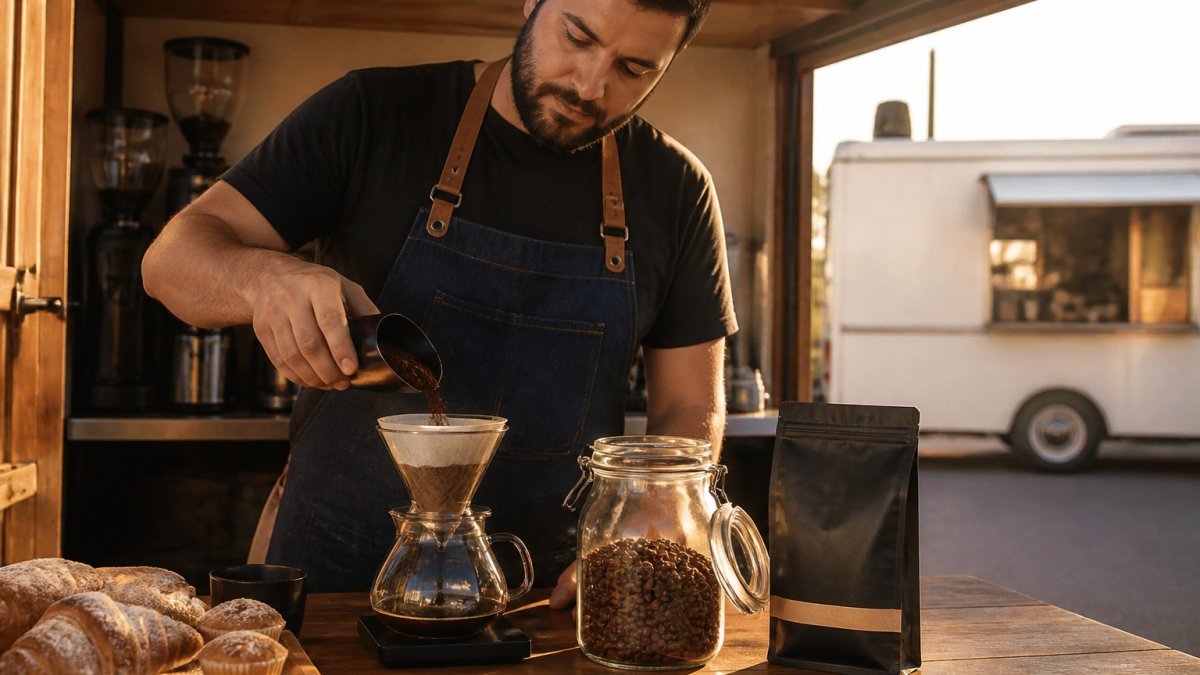
- Grind your beans right before you brew. Set up your brewer, heat your water, and weigh your beans first, then grind as the last step before brewing.
- A burr grinder tends to give a more even grind. An uneven grind leaves both fine dust (which over-extracts and fades fast) and coarse chunks (which under-extract), so the cup tastes muddled even before oxidation sets in.
- Measure and brew in one smooth step so the grounds do not sit in the grinder bin or on the counter.
- Skip the pre-grind habit. Grinding a week's worth of beans on Sunday feels efficient, but by Wednesday the grounds are well past the 15-minute window and the cup will taste flat.
Pre-ground coffee sold in bags is already past this window when you open it. That is one reason whole beans usually taste better at home: you control the moment the surface area is created.
How to Store Coffee Beans So the Rule Holds
Storage decides whether the 15-15-15 rule works in your kitchen. Our complete guide to storing coffee beans covers the containers and conditions that keep them fresh. Good storage slows oxidation and keeps moisture and heat away from the beans. But not all containers do the same job, and the differences matter more than most buyers realize.
The three enemies: oxygen, moisture, and heat
Roasted beans are chemically active. They release carbon dioxide for days after roasting, a process called degassing, and they absorb oxygen and moisture from the air. Heat speeds both reactions. A container that blocks oxygen but traps gas, or one that seals tightly but sits on a sunny counter, will not get you to the 15-day mark in good shape.
Container types compared
- One-way valve bags. These are the bags most specialty roasters ship in. The valve lets carbon dioxide escape so the bag does not balloon, while limiting outside air from getting in. They are excellent for the first week or two after roasting, but once opened they are only as good as your ability to press out the air and reseal them.
- Vacuum-sealed containers. Removing air slows oxidation effectively, but vacuum sealing immediately after roasting can pull out gases the beans still need to shed. A common pattern is to let beans rest a day or two after roasting, then vacuum-seal for longer storage.
- Airtight canisters with a valve. A rigid canister with a one-way valve and an opaque body is the most practical daily-use option. It blocks light, limits air exchange, and lets gas escape. Look for a tight gasket and a body that does not let light through.
- Glass jars without a valve. A mason jar seals well, but it is clear and has no way for gas to escape, so pressure can build and the seal can weaken. Keep glass jars in a dark cabinet and burp them in the first few days after roasting.
The storage rules that actually hold
- Keep it cool and dark. Store beans away from the stove, the oven, and direct sunlight. A cabinet away from appliances is better than an open shelf.
- Avoid the fridge for daily use. The fridge is humid and full of food odors that beans absorb. Repeated temperature changes cause condensation on the beans.
- The freezer is for longer-term storage, not daily scooping. If you buy more than you can finish in two weeks, freeze portions in airtight bags, press out the air, and let them come to room temperature before grinding. Do not refreeze the same beans repeatedly.
- Buy what you will use soon. Storage helps, but no container can reverse age. A bag roasted three weeks ago will not improve in a perfect canister.
Container material matters too. A tight seal and an opaque body do more for freshness than a fancy design. The best container is the one you will actually close properly every time.
Specialty Coffee Association guidance on coffee storage and freshness
Coffee Brew Ratio 1:15 vs. the 15-15-15 Rule
This is where the confusion starts. The "1:15" brew ratio and the 15-15-15 freshness rule share the number 15, but they measure different things.
- The 1:15 ratio is a brewing guideline. It suggests about 15 grams of water for every 1 gram of coffee. Some brewers use a golden ratio close to 1:16 or 1:17 instead.
- The 15-15-15 rule is about freshness. It covers green beans, roasted beans, and ground coffee.
A simple way to remember it: the brew ratio controls strength and taste in the cup, while the 15-15-15 rule controls how fresh the coffee is before it hits the filter.
Start with a ratio you like, then focus on freshness. Our guide to brewing fresh roasted coffee at home walks through the process step by step. A perfect ratio cannot save stale beans.
Putting the 15-15-15 Rule Into Practice at Home
You do not need special equipment to use the rule. Start with a few simple habits.
- Check the roast date when you buy. Choose beans roasted within the last few weeks.
- Buy whole beans when you can, and grind them right before brewing.
- Store beans airtight in a cool, dark spot.
- Brew within 15 minutes of grinding.
- Finish the bag within about two weeks of roasting.
If you want to go further, track which bags taste best to you. Over time, you will learn how quickly your favorite beans fade in your own kitchen.
For current prices and roast dates on our beans, check the laffogatocoffee.com website or contact us for a quote, since pricing depends on size, quantity, and delivery.
Frequently Asked Questions
What does the 1:15 coffee ratio mean?
The 1:15 ratio is a brewing measurement, not a freshness guideline. It means one gram of coffee for every 15 grams of water, so 20 grams of coffee would pair with about 300 grams of water. It is easy to confuse with the 15-15-15 rule because both use the number 15, but the two address different things: the ratio controls strength during brewing, while the 15-15-15 rule covers how long beans, grounds and brewed coffee stay at their best. Measuring by weight rather than scoops gives the most consistent results.
How long do coffee beans stay fresh after grinding?
According to the 15-15-15 guideline, ground coffee should be brewed within about 15 minutes of grinding. After grinding, the coffee's surface area increases sharply, so oxidation and aroma loss happen quickly. Grinding just before brewing is the most reliable way to keep flavor intact. If you must grind ahead, store the grounds in an airtight container away from heat and light, and expect a noticeable drop in aroma within the hour.
How should you store freshly roasted coffee beans?
Store roasted beans in an airtight, opaque container at room temperature, away from heat, light, and moisture. Avoid the refrigerator and freezer for daily use, since condensation can form when beans are repeatedly removed. A container with a one-way valve helps release carbon dioxide while limiting oxygen exposure. Buying in smaller amounts that you can finish within about 15 days of the roast date keeps the coffee closer to its peak flavor.
Does the 15-15-15 rule differ from the 12-12-12 rule?
Some industry sources cite a 12-12-12 rule as an alternative freshness guideline, suggesting that the window can shift with bean processing and storage conditions. The 15-15-15 rule is the more widely cited benchmark, with 15 months for green beans, 15 days for roasted beans and 15 minutes for ground coffee. Treat both as rough guides rather than exact cutoffs, and judge freshness by aroma and taste when in doubt.