 comparison
Specialty Coffee vs Grocery Store Beans: What You're Paying For
Table of Contents
- Specialty Coffee vs Grocery Store Coffee: The Core Differences
- Coffee Roast Date and Freshness: Why Timing Matters
- Best Supermarket Coffee Beans: The Middle Ground Option
- Flavor Profile, Acidity, and Sensory Experience
- How to Store Coffee Beans for Maximum Shelf Life
- Specialty Coffee Cost: Price Per Cup Breakdown
- Environmental and Ethical Impact: Supply Chain Differences
- Equipment Sensitivity and Brewing Extraction
- Frequently Asked Questions
Last Updated: October 7, 2026
Specialty Coffee vs Grocery Store Coffee: The Core Differences
The difference between specialty coffee and grocery store beans isn't subtle. Specialty coffee is graded on the Specialty Coffee Association (SCA) scale, where beans scoring 80 or higher qualify as specialty grade. Grocery store coffee typically falls below that threshold, often significantly.
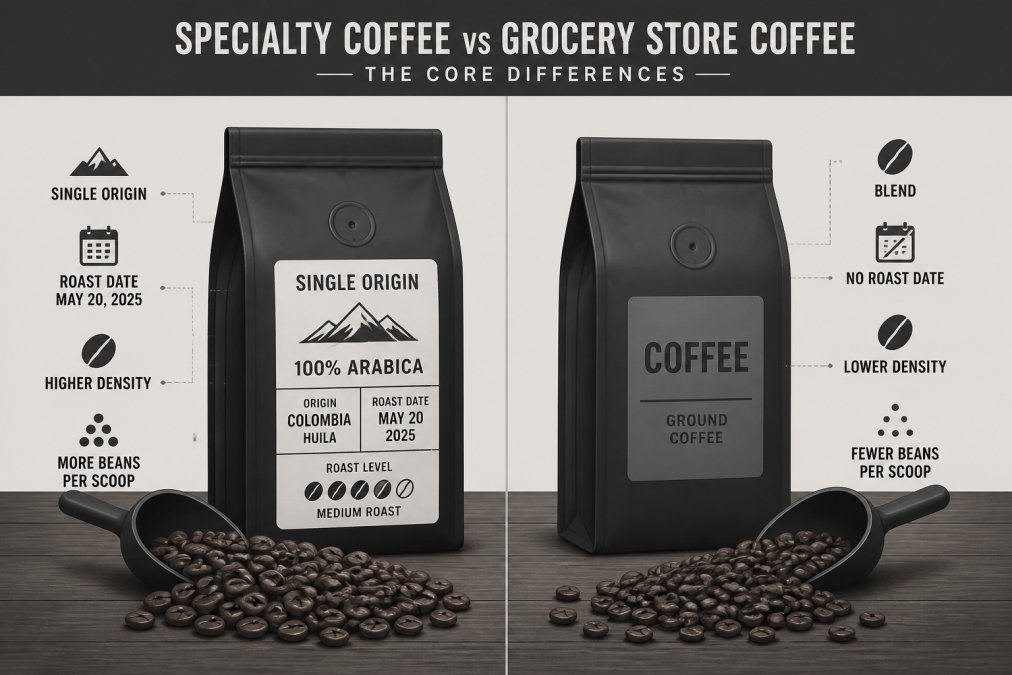
At Laffogato Coffee, we focus on freshness, sourcing transparency, roasting precision, and how the beans are handled throughout the supply chain.
Specialty coffee comes from single origins or carefully curated blends where the roaster knows exactly where the beans came from. Grocery store coffee often blends beans from multiple sources to meet volume quotas and price points. That's not inherently bad, it's just a different business model.
The practical result: specialty coffee delivers a more complex flavor experience, tastes noticeably fresher, and gives you control over extraction. Grocery store coffee is convenient, familiar, and often tastes flat or bitter because the beans have oxidized or been roasted too dark to mask age and quality issues.
Coffee Roast Date and Freshness: Why Timing Matters
Roast date is the single most important indicator of freshness. Coffee begins to lose flavor compounds the moment it's roasted. After two weeks, the beans start degrading noticeably. After a month, most of the volatile aromatics that make specialty coffee taste good are gone.
Specialty roasters stamp the roast date on every bag because freshness is their competitive advantage. You know exactly how old your beans are and can brew them at their peak. Grocery store coffee rarely displays a roast date, which means you have no way of knowing if those beans were roasted last week or last quarter.
The degassing process matters too. Freshly roasted beans release carbon dioxide for 24-48 hours after roasting. This is why specialty roasters often recommend waiting a few days before brewing, the CO₂ can interfere with water extraction. Grocery store coffee, by contrast, is usually roasted weeks or months before you buy it, so the degassing is already complete. That's actually convenient if you want to brew immediately, but it also means the beans have already lost much of their original character.
Oxidation and Degassing in Fresh Beans
Oxidation is the enemy of coffee flavor. The moment roasted beans are exposed to air, oxygen begins breaking down the compounds that create complexity and brightness. This is why specialty roasters use one-way valves on their bags, the valve lets CO₂ escape during degassing but prevents oxygen from entering.
Grocery store packaging varies. Some bags have one-way valves. Many don't. And even with a valve, if the bag sits on a shelf for months, oxidation is inevitable. The beans may look fine, but they've chemically changed. What you taste is often a dull, flat version of what the beans could have been.
Fresh specialty beans have a visible difference in appearance too. They're denser and have a richer color, usually a medium to dark brown with some sheen. Older beans look duller and sometimes have a grayish cast, which indicates oxidation has advanced.
Best Supermarket Coffee Beans: The Middle Ground Option
Not everyone wants to order specialty coffee online or visit a specialty roaster. If you're buying from a grocery store, some brands are clearly better than others.
Stumptown Coffee Roasters is consistently cited as a reliable grocery store option. Their whole-bean coffee is available through retail channels, and the brand has earned recognition among specialty coffee enthusiasts. This is the middle ground: beans roasted by people who care about quality, but distributed through conventional retail. The trade-off is that freshness varies depending on how long the bags have been sitting on the shelf.
Café Bustelo appears in comparisons of grocery store options and serves as an alternative for shoppers looking at familiar brands. These options give you something better than commodity coffee without requiring a specialty subscription.
The key limitation: even the best grocery store beans are subject to retail distribution timelines. They may have been roasted weeks ago. You still don't know the exact roast date unless it's printed on the bag. And the sourcing is usually less transparent than specialty brands.
Flavor Profile, Acidity, and Sensory Experience
This is where specialty coffee truly shines. Specialty beans are roasted to highlight their unique characteristics, what coffee professionals call "flavor notes." A single-origin Ethiopian bean might taste like blueberry and jasmine. A Colombian might have chocolate and caramel notes.
Grocery store coffee is often roasted darker, which masks the bean's origin characteristics and creates a more uniform, bitter taste. Dark roasting is partly a cost strategy, it makes lower-quality beans taste more consistent. It's also partly a preference thing: many people grew up drinking dark roast and expect coffee to taste that way.
Acidity in coffee isn't a flaw, it's brightness. High-quality beans have pleasant acidity that makes the flavor pop. Poor-quality beans have harsh, unpleasant acidity that tastes sour. Specialty roasters preserve and highlight good acidity. Grocery store roasters often roast past it, creating a flat, heavy taste.
The sensory experience extends to aroma and body too. Specialty coffee has a fragrant, complex aroma. Grocery store coffee often smells generic or even stale. Body refers to how the coffee feels in your mouth, thick and full versus thin and watery.
How to Store Coffee Beans for Maximum Shelf Life
Proper storage extends the life of your beans and slows oxidation. The enemies are light, heat, air, and moisture.
Store beans in an airtight container in a cool, dark place. A sealed glass jar with a tight lid works well. Avoid clear containers, light degrades coffee. Keep the container away from the stove, direct sunlight, and humid areas like above the sink.
Whole beans last longer than ground coffee. Ground coffee has more surface area exposed to air, so it stales faster. If you grind at home just before brewing, you get the best flavor. If you must buy pre-ground, use it within a week.
Freezing is debated among coffee professionals. Some say it works; others say condensation damages the beans when they thaw. The safest approach: buy smaller quantities and use them within 2-3 weeks of the roast date.
Grocery store coffee often comes in bags designed for long shelf life, which means they're built to survive months of storage. Specialty roasters assume you'll use the beans within weeks, so their bags prioritize freshness over longevity.
Specialty Coffee Cost: Price Per Cup Breakdown
This is the question everyone asks: is specialty coffee worth the price?
The math depends on how you brew. Specialty beans cost more per pound than grocery store coffee, that's the reality. But cost per cup is different from cost per pound. A single-origin specialty bean might cost more upfront, but you're also using less of it because it extracts more efficiently.
Laffogato Coffee focuses on delivering quality. When you're brewing at home, the difference between a grocery coffee and a specialty roaster's offering can be noticeable in the cup, with more complexity, better balance, and genuine freshness.
The price also reflects what you're buying: direct relationships with farmers, careful sourcing, small-batch roasting, and quality control. Commodity coffee prices are set by global markets and volume. Specialty coffee prices reflect the actual cost of doing business with integrity.
If you drink two cups a day, the difference between cheap and specialty coffee might be $2-3 per day. Over a month, that's $60-90. For many people, the improvement in taste and experience justifies that cost. For others, it doesn't. There's no objectively "right" answer, it depends on your priorities and budget.
Environmental and Ethical Impact: Supply Chain Differences
Specialty coffee roasters often emphasize direct trade relationships with farmers. This means the roaster buys directly from the farm, cutting out middlemen and ensuring farmers get a fair price. Commodity coffee flows through brokers and importers, and farmers often get the worst end of that deal.
Direct trade also creates accountability. A specialty roaster knows the farm, the farmer, and the farming practices. Grocery store coffee's supply chain is opaque, you have no idea where the beans came from or how they were grown.
Environmental impact varies widely within both categories. Some specialty roasters source from farms practicing shade-growing and regenerative agriculture. Some grocery store coffee comes from monoculture plantations that damage ecosystems. But the specialty model makes it easier to know what you're supporting.
If ethical sourcing matters to you, specialty coffee gives you transparency. You can research the roaster's sourcing practices and feel confident about where your money goes. With grocery store coffee, that information is usually unavailable.
Equipment Sensitivity and Brewing Extraction
This is where specialty coffee demands more from you as a brewer. Higher-quality beans respond to brewing technique. A small change in water temperature, grind size, or brew time produces a noticeable difference in flavor.
Grocery store coffee is forgiving. It's roasted to taste acceptable across many brewing methods and conditions. Specialty coffee rewards precision.
This is why specialty coffee appeals to people who enjoy the process of brewing. It's not just about the end result, it's about the ritual and the control. For others, it's a barrier.
The good news: you don't need expensive equipment. A basic burr grinder, a pour-over cone, and a kettle are all you need to brew specialty coffee well.
The choice between specialty coffee and grocery store beans comes down to what matters to you. If freshness, flavor complexity, and knowing where your coffee comes from appeal to you, specialty coffee is worth exploring.
At Laffogato Coffee, we believe that great coffee should be accessible. We're launching with specialty-grade beans roasted locally, with transparent sourcing and clear roast dates on every bag.
| Aspect | Specialty Coffee | Grocery Store Coffee | Middle Ground (Premium Grocery) |
|---|---|---|---|
| Roast Date | Always printed | Rarely printed | Sometimes printed |
| Freshness | 1-2 weeks old | Often 1-3 months old | 2-4 weeks old |
| Sourcing Transparency | High (direct trade common) | Low (opaque supply chain) | Medium (brand reputation) |
| Flavor Complexity | High (origin characteristics) | Low (uniform, dark roast) | Medium (quality blend) |
| Price Per Pound | Higher | Lower | Medium |
| Brewing Sensitivity | High (rewards technique) | Low (forgiving) | Medium |
| Shelf Life After Purchase | 2-3 weeks optimal | 1-2 months acceptable | 3-4 weeks acceptable |
Frequently Asked Questions
What is the main difference between specialty coffee and grocery store coffee beans?
Specialty coffee is graded 80 or higher on the SCA scale and typically comes from single origins or direct trade relationships, with a documented roast date. Grocery store coffee is often a blend of lower-grade commodity beans roasted weeks or months before purchase. Specialty beans retain more flavor notes, acidity, and aroma due to fresher roasting and careful sourcing. Grocery coffee prioritizes shelf stability and cost efficiency over flavor complexity.
How do I know if coffee beans are fresh, and what roast date should I look for?
Check the roast date printed on the bag, specialty roasters always display this. Beans are optimal between 5 and 30 days after roasting; after 30 days, oxidation reduces flavor clarity. Grocery store beans rarely show a roast date, making freshness impossible to verify. Specialty roasters prioritize recent production. Always buy from sources that guarantee roast dates.
Are specialty coffee beans worth the extra cost compared to grocery store options?
The cost difference depends on your brewing method and taste expectations. Specialty beans reveal more complexity in single-origin flavors and acidity, which matters most with pour-over or espresso equipment. If you brew with a basic drip machine, the difference is less pronounced. Price per cup for specialty coffee is higher upfront, but the sensory experience and extraction quality justify the cost for home baristas. Grocery store coffee offers convenience and consistency at a lower price point, but lacks flavor depth.
How should I store coffee beans to keep them fresh as long as possible?
Store beans in an airtight container away from light, heat, and moisture at room temperature. Avoid the freezer or refrigerator, which introduces condensation and degrades bean quality. Keep beans in their original bag if it has a one-way valve, which allows CO2 to escape while preventing oxygen entry. Whole beans stay fresh longer than ground coffee. Buy only what you'll use within 3-4 weeks of the roast date for maximum shelf life and flavor retention.