 how-to
How to Brew Fresh Roasted Coffee at Home
Table of Contents
- Understanding Fresh Roasted Coffee and Degassing
- How Long to Rest Coffee After Roasting Before Brewing
- The Best Way to Brew Fresh Coffee at Home
- Coffee-to-Water Ratio for Pour-Over and Other Methods
- Grinding Freshly Roasted Beans for Optimal Extraction
- Water Temperature and Brew Time for Fresh Roasted Coffee
- How to Store Freshly Roasted Coffee Beans
- Troubleshooting Extraction Issues with Very Fresh Beans
- Frequently Asked Questions
Last Updated: October 13, 2026
Understanding Fresh Roasted Coffee and Degassing
Fresh roasted coffee smells incredible, but to brew fresh roasted coffee right away is a mistake most home enthusiasts make.
Roasting creates carbon dioxide gas that gets trapped inside the beans, and they keep releasing it for several days.
This process is called degassing or off-gassing. Understanding it changes everything about how you approach brewing.
What Happens in the First Hours After Roasting
The moment roasting stops, the beans are still hot and continue releasing gases as they cool.
The bean's surface is still changing: the chaff is still loose and the bean is settling into its final structure.
By hour 24, the pace of degassing slows. But it doesn't stop. The beans keep releasing gas for days.
Why Carbon Dioxide Release Matters for Flavor
Carbon dioxide affects how water moves through the grounds.
The gas also affects espresso crema. Fresh beans produce excessive crema that can block water from reaching the grounds; as beans rest, crema becomes more stable and balanced.
Beans rested 3-5 days taste brighter and more complex than beans brewed at 12 hours. Brightness fades as beans age further, but that's separate from degassing.
How Long to Rest Coffee After Roasting Before Brewing
Wait at least 12 hours, but 3-5 days is ideal for most brewing methods. Exact timing depends on roast level and brew method.
Resting is not optional, it's the single biggest factor in getting good flavor from fresh roasted coffee. Skip it and your brew will disappoint, no matter how good your technique.
Rest Time by Roast Level and Brew Method
Light roasts need more rest than dark roasts. They degas less overall but more slowly, benefiting from 5-7 days before flavor becomes balanced.
Medium roasts are the sweet spot: they degas quickly and taste excellent after 3-5 days. Most specialty coffee falls here.
Dark roasts degas faster because heat opens up more of the bean's interior.
Brewing method matters too:
- Espresso: Wait 5-10 days minimum. Fresh beans produce too much crema and extract unevenly in espresso. The pressure amplifies any degassing issues.
- Pour-over: 3-5 days is ideal. These methods are forgiving and work well with beans that have rested a few days.
- French press: 3-4 days works well. The immersion brewing style is less sensitive to degassing than espresso.
- AeroPress: 2-4 days is good. This method's flexibility means it handles fresher beans better than espresso.
The Optimal Brew Window
Every bag of fresh roasted coffee has a window where it tastes best, opening after degassing completes and closing as beans age and lose brightness.
Before day 4, beans are still degassing.
Old coffee isn't bad, it stays drinkable for months if stored properly, but the special qualities that justify buying fresh roasted coffee fade after two weeks.
The Best Way to Brew Fresh Coffee at Home
Brewing fresh roasted coffee isn't complicated, but it requires attention to a few key factors. Your method shapes everything else: grind size, water temperature, brew time, and coffee-to-water ratio.
Choosing Your Brewing Method
The best method is the one you'll use consistently. Don't buy expensive equipment just to let it sit unused.
Pour-over methods include:
- Hario V60
- Melitta
- Chemex
- Kalita Wave
These all work similarly: water pours through grounds into a cup or pot below, the filter catches grounds and oils, and you control pour rate and water temperature directly.
Step-by-Step Brewing Process
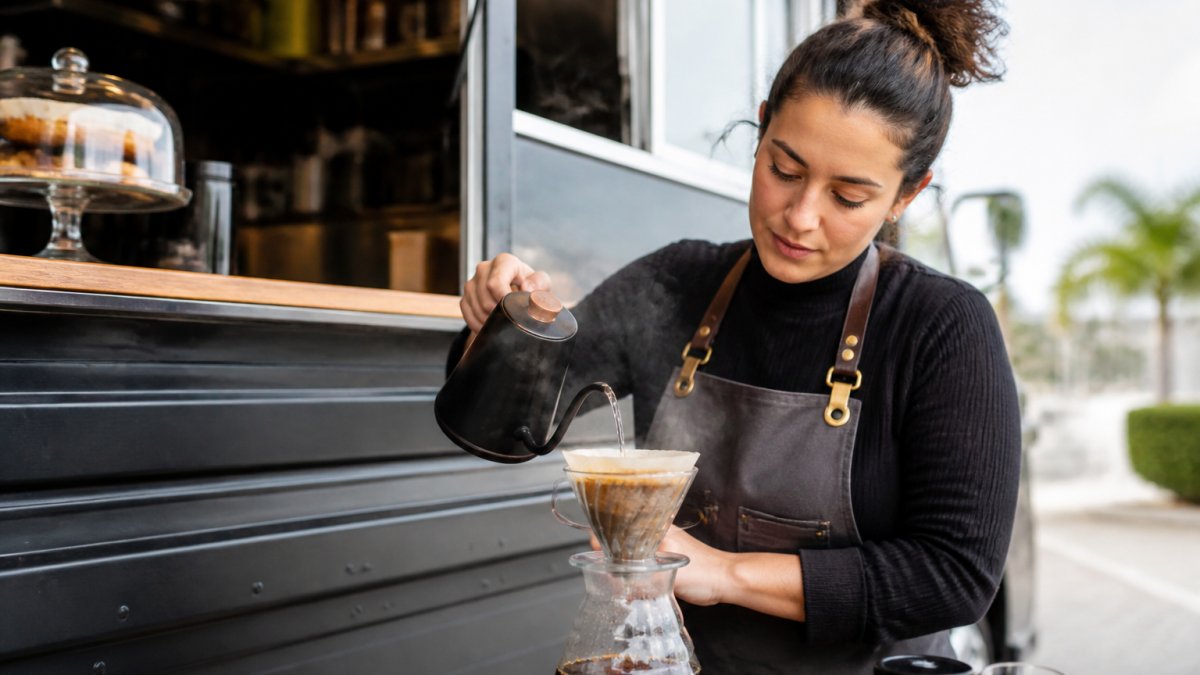
Here's how to brew pour-over fresh roasted coffee:
-
Measure your beans and water. Use a scale. Weigh your beans and calculate water needed using a 1:16 ratio (see the next section for details).
-
Grind just before brewing. Grind to medium-fine consistency. The grounds should look like sea salt or sand, not powder.
-
Heat water to 195-205°F. Use a thermometer or let boiling water cool for 30 seconds.
-
Wet the filter. Pour a small amount of hot water through the filter to rinse it and warm the brewer.
-
Add grounds and bloom. Pour grounds into the filter. Pour just enough water to wet them (about twice the weight of the coffee). Wait 30-45 seconds. This releases CO2 trapped in the grounds.
-
Pour the rest of the water. Pour slowly in circular motions. Keep the water level consistent. Total brew time should be 3-4 minutes.
-
Let it drip completely. Wait until water stops dripping through before removing the brewer.
-
Taste and adjust. Note the flavor. If it tastes sour, your next brew should use hotter water or a finer grind. If it tastes bitter, use cooler water or a coarser grind.
Coffee-to-Water Ratio for Pour-Over and Other Methods
Getting the ratio right is essential: too much coffee tastes harsh, too little tastes weak and sour.
The standard ratio is 1:16 (one part coffee to 16 parts water by weight). This works for most brewing methods and most coffee.
Measuring Your Coffee Dose and Water
Use a kitchen scale. Scales are cheap and make a huge difference in consistency.
Here's a simple table:
| Coffee Weight | Water Weight | Brew Size |
|---|---|---|
| 15 grams | 240 grams | 8 oz cup |
| 20 grams | 320 grams | 10-11 oz cup |
| 25 grams | 400 grams | 13-14 oz cup |
| 30 grams | 480 grams | 16 oz cup |
Start with these amounts, then brew, taste, and adjust: use slightly more coffee if the brew tastes weak, slightly less if it tastes bitter.
Adjusting Ratio by Brew Method
Different brewing methods work with slightly different ratios:
- Espresso: 1:2 to 1:3 (very concentrated). Use 18-20 grams of coffee to pull 36-60 grams of liquid.
- French press: 1:15 to 1:17. The immersion method is forgiving.
- AeroPress: 1:16 to 1:18. Flexible method works with various ratios.
- Stovetop/Moka pot: 1:8 to 1:10 (stronger brew). These methods produce concentrated coffee.
Start with 1:16 and adjust based on taste. Most people find their sweet spot within a few brews.
Grinding Freshly Roasted Beans for Optimal Extraction
Grind size controls how fast water moves through the coffee. Wrong grind size ruins even good beans and proper technique.
Grind too coarse and water rushes through, leaving coffee sour and thin. Grind too fine and water moves too slowly, leaving it bitter and harsh.
Grind Size and Extraction Time
Coarse grinds work with longer brew times, fine grinds with shorter, and medium grinds with medium brew times.
For pour-over methods:
- Coarse: 4-5 minute brew time (rarely used for pour-over)
- Medium: 3-4 minute brew time (standard)
- Fine: 2-3 minute brew time (not recommended for pour-over; use for espresso)
For French press:
- Coarse: 4-5 minute steep time (standard)
For espresso:
- Fine: 25-30 second extraction time
For AeroPress:
- Medium-fine: 1-2 minute brew time
Grinding Just Before Brewing
Grind immediately before brewing. Ground coffee loses flavor quickly as it oxidizes. Whole beans stay fresh much longer.
Most burr grinders take 30-60 seconds per cup, and it's worth the time, pre-ground coffee tastes noticeably flatter, especially with fresh roasted beans.
Buy a burr grinder, not a blade grinder. Burr grinders produce consistent particle size. Blade grinders chop randomly and produce uneven extraction.
Water Temperature and Brew Time for Fresh Roasted Coffee
Water temperature and brew time work together. Hotter water extracts faster. Longer brew times extract more flavor.
Fresh roasted coffee is sensitive to both. Get either one wrong and the brew suffers.
Finding the Right Temperature Range
The ideal range is 195-205°F: hot enough to extract flavor quickly, but not so hot it over-extracts and creates bitterness.
Without a thermometer, let boiling water cool for 30 seconds to get close to 200°F.
Temperature matters more with fresh beans, which are still releasing gases, hotter water can over-extract before degassing is complete.
Adjusting Brew Time for Freshness
Brew time for fresh roasted coffee should be slightly longer than for older beans. The active degassing means water doesn't contact the grounds as efficiently.
For pour-over:
- Older beans: 3-3.5 minutes
- Fresh beans (3-7 days old): 3.5-4 minutes
- Very fresh beans (less than 3 days): 4-4.5 minutes
If your brew tastes sour, increase brew time by 15-30 seconds; if bitter, decrease it by 15-30 seconds.
How to Store Freshly Roasted Coffee Beans
Storage determines how long your coffee stays fresh. Proper storage extends the optimal flavor window by several days.
Coffee's enemies are air, light, heat, and moisture. Minimize exposure to all four.
Storage Containers and Environment
Use an airtight container: glass jars with rubber seals work well, vacuum-sealed bags even better.
Store in a cool, dark place. A pantry or cabinet is ideal.
Oxygen causes staleness, so once you open a bag, use it within 2-3 weeks for best taste.
Maintaining Freshness Over Time
Check the roast date on your bag. Buy coffee roasted within the last week when possible.
If you buy whole beans in bulk, divide them into smaller containers. Keep most sealed and unopened.
Grind only what you'll brew immediately. Ground coffee stales much faster than whole beans.
Troubleshooting Extraction Issues with Very Fresh Beans
Fresh roasted coffee sometimes tastes wrong even when you follow the steps correctly. Usually it's an extraction problem: the water is pulling out too little or too much flavor.
Signs of Under-Extraction
Under-extracted coffee tastes sour and thin, lacking body and sweetness, with a sharp, unpleasant flavor.
This happens when:
- Water isn't hot enough
- Brew time is too short
- Grind is too coarse
- Coffee is too fresh (still heavily degassing)
Try these fixes:
- Increase water temperature by 5°F
- Extend brew time by 30 seconds
- Use a finer grind
- Wait another day or two before brewing
Signs of Over-Extraction
Over-extracted coffee tastes bitter and harsh, with too much body and an unpleasant, astringent flavor.
This happens when:
- Water is too hot
- Brew time is too long
- Grind is too fine
- You're stirring or agitating too much
Try these fixes:
- Decrease water temperature by 5°F
- Shorten brew time by 15-30 seconds
- Use a coarser grind
- Avoid stirring during the brew
- Check your coffee-to-water ratio (too much coffee can feel over-extracted)
Adjustments to Make Day by Day
Fresh roasted coffee changes daily as it degasses.
Days 1-2: Coffee is too fresh.
Days 3-4: Coffee is still degassing but becoming drinkable.
Days 5-7: This is the sweet spot.
Days 8-14: Coffee is still excellent.
Days 15+: Coffee starts losing brightness. It tastes flatter.
At laffogatocoffee.com, we roast coffee locally.
Frequently Asked Questions
Can I brew freshly roasted coffee right after roasting?
Brewing immediately after roasting produces unbalanced, sour coffee because excess carbon dioxide interferes with extraction. Most fresh roasted coffee needs 12-24 hours of rest before brewing, depending on roast level and brew method. Light roasts typically require longer rest than dark roasts. Waiting allows the beans to degas and develop the complex flavors that make fresh roasted coffee worth seeking out.
What is the best coffee-to-water ratio for pour-over brewing?
A standard starting point for pour-over is 1:16 (one part coffee to 16 parts water by weight). For example, use 25 grams of ground coffee with 400 grams of water. This ratio works well for most pour-over methods and fresh roasted beans. You can adjust to 1:15 for a stronger cup or 1:17 for a lighter one, then taste and refine based on your preference. Using a scale ensures consistency.
How should I store freshly roasted coffee beans to keep them fresh?
Store beans in an airtight container away from heat, light, and moisture at room temperature. A sealed jar or bag with a one-way valve works well. Avoid the refrigerator or freezer unless storing for several weeks. Keep beans whole until just before brewing to preserve freshness. Properly stored fresh roasted coffee stays optimal for 2-4 weeks after the roast date. Check the roast date on your bag to know exactly how fresh your beans are.
What grind size should I use for freshly roasted coffee?
Grind size depends on your brew method. Pour-over typically uses medium-fine grounds, while French press uses coarse grounds. Fresh roasted beans may behave differently than aged beans due to remaining carbon dioxide, so you may need to adjust your usual grind slightly coarser if you experience over-extraction. Grind just before brewing to maximize freshness and aroma. Start with your preferred setting and adjust based on taste.