 how-to
How to Identify Specialty Grade Coffee Beans
Table of Contents
- What Makes Coffee Specialty Grade
- Understanding Specialty Coffee Grading Explained
- How to Read Coffee Bag Labels for Quality Signals
- Evaluating Coffee Bean Defects and Quality
- How to Taste Specialty Coffee and Identify Quality
- A Practical Buyer Checklist for Specialty Grade Beans
- Verifying Grade Claims and Avoiding Marketing Hype
- Frequently Asked Questions
Last Updated: October 12, 2026
What Makes Coffee Specialty Grade
Specialty grade coffee beans represent the top tier of coffee quality. But what actually separates a specialty grade bean from everything else on the shelf?
The answer starts with a number: 80. Specialty grade coffee scores 80 points or higher on a 100-point scale used by professional coffee graders.
Here's what matters: specialty grade coffee comes from specific origins, processed with care, and roasted to highlight its unique characteristics. We focus on sourcing beans that meet these exacting standards because the difference in your cup is real and measurable.
The 80-Point Threshold and Cupping Score
A cupping score is the numerical rating a professional coffee grader assigns after tasting a coffee sample. The 100-point scale breaks down like this:
- 90-100 points: Exceptional
- 85-89 points: Excellent
- 80-84 points: Very Good (specialty grade minimum)
- Below 80: Commercial or lower grade
The 80-point threshold isn't arbitrary. Coffees that score 80 or above have been evaluated for specific quality attributes. These include aroma, flavor, acidity, body, balance, sweetness, uniformity, and clean cup characteristics.
Professional graders, called Q graders, use a standardized cupping protocol to score coffee. They brew coffee samples under controlled conditions and taste them at specific temperatures. This process removes variables and allows consistent scoring across different coffees and origins.
Specialty Grade vs. Commercial Coffee
The difference between specialty grade and commercial coffee comes down to quality standards and grading rigor.
Commercial coffee typically scores below 80 points. These beans may have defects, inconsistent flavor, or limited complexity. They're often used in blends designed to hit a price point rather than showcase quality. Commercial coffee is perfectly fine for everyday drinking, but it won't have the depth or character of specialty grade.
Specialty grade coffee emphasizes origin, processing method, and flavor development. Single origin coffees, beans from one specific farm or region, are common in specialty grades. This traceability matters because it allows you to taste the unique characteristics of that location.
Understanding Specialty Coffee Grading Explained
Specialty coffee grading is a systematic process. Understanding how it works helps you evaluate claims on coffee bags and make informed choices.
How Coffee Graders Evaluate Beans
Coffee graders assess both green beans (unroasted) and roasted beans. The green bean evaluation happens first and is the most rigorous.
Green bean inspection focuses on:
- Bean size and density: Larger, denser beans typically indicate better quality and altitude-grown coffee
- Color uniformity: Consistent green color suggests proper processing and storage
- Defect count: Primary defects (broken beans, black beans, moldy beans) and secondary defects (chipped beans, discolored beans) are counted and scored
A coffee must have very few defects to qualify as specialty grade. Typically, specialty coffees allow only 0-3 primary defects per 300-gram sample.
After roasting, graders evaluate the roasted beans for appearance, then cup the coffee. Cupping involves brewing the coffee and tasting it multiple times as it cools. Graders score aroma, flavor, aftertaste, acidity, body, balance, uniformity, and clean cup on a scale of 6-10 for each attribute.
Green Coffee Inspection and Defects
Green coffee quality directly determines what you'll taste in your cup. This is where specialty grade coffee separates from the rest.
Primary defects are serious flaws:
- Black beans (fully fermented or moldy)
- Broken or chipped beans
- Severely discolored beans
- Insect-damaged beans
Secondary defects are less severe:
- Slight discoloration
- Small chips or cracks
- Slight insect damage
Specialty grade coffees allow minimal defects. A sample with more than 3-5 primary defects per 300 grams typically won't qualify. Commercial coffees may have 10 or more defects per sample.
This matters because defects translate to off-flavors in your cup. A black bean can create a bitter, moldy taste. Broken beans may over-extract during brewing. When you're paying for specialty grade coffee, you're paying for beans that have been carefully inspected and sorted.
How to Read Coffee Bag Labels for Quality Signals
The bag in your hand tells a story. Learning to read it helps you verify quality claims and avoid marketing hype.
What Information Indicates Specialty Grade
Look for these signals on the bag:
- Cupping score or Q score: A number like "86/100" or "specialty grade" indicates professional evaluation
- Single origin: The specific farm, region, or cooperative is named
- Processing method: Washed, natural, honey, or other specific methods are stated
- Altitude: Listed in feet or meters (higher altitude often indicates better quality)
- Harvest date: The year the coffee was picked
- Roast date: When the beans were roasted (critical for freshness)
Specialty grade bags typically include most or all of this information. Commercial coffee bags often list only the country of origin and roast date, if anything.
Be skeptical of vague claims like "premium" or "artisanal" without specific data. These are marketing terms, not quality certifications. A real specialty grade coffee will back up its claims with scores, origins, and processing details.
Roast Date and Freshness Verification
Roast date is non-negotiable. This single piece of information tells you more about coffee quality than almost anything else.
Specialty coffee is best consumed within 2-4 weeks of roasting. After that window, the coffee begins to lose volatile compounds that create complexity and flavor.
When you buy coffee, check the roast date. If it's not printed on the bag, don't buy it.
We print the roast date clearly on every bag. We also roast to order for subscriptions, so you're receiving coffee days after roasting, not months after.
Evaluating Coffee Bean Defects and Quality
You can assess some quality factors at home. Others require professional equipment and training. Knowing the difference prevents disappointment.
Primary and Secondary Defects
When you open a bag of specialty coffee, you shouldn't see obvious defects. Look for:
What you might see in specialty coffee:
- Uniform bean size and color
- Occasional tiny chips or slight discoloration (secondary defects)
- Consistent appearance across the bag
Red flags that suggest lower quality:
- Multiple broken or very small beans
- Beans that are noticeably darker or lighter than others
- Beans with visible mold or dark spots
- A musty or off smell when you open the bag
Specialty grade beans are sorted to remove primary defects before roasting. If you see significant defects, the coffee wasn't properly inspected.
What You Can Assess at Home
You can evaluate some quality attributes without professional training. This doesn't replace a cupping score, but it gives you useful information.
At-home quality checks:
- Aroma: Smell the beans. Specialty coffee should have a pleasant, complex aroma. Off smells (musty, sour, burnt) suggest defects or poor storage
- Bean appearance: Look for uniformity in size and color. Specialty beans are consistent
- Roast evenness: Beans should be evenly colored. Uneven roasting suggests careless roasting
- Density: Specialty beans feel heavier for their size. Hold a bean, quality beans are dense
These checks won't tell you if the coffee scored 82 or 87 points. But they'll help you spot obviously lower-quality coffee.
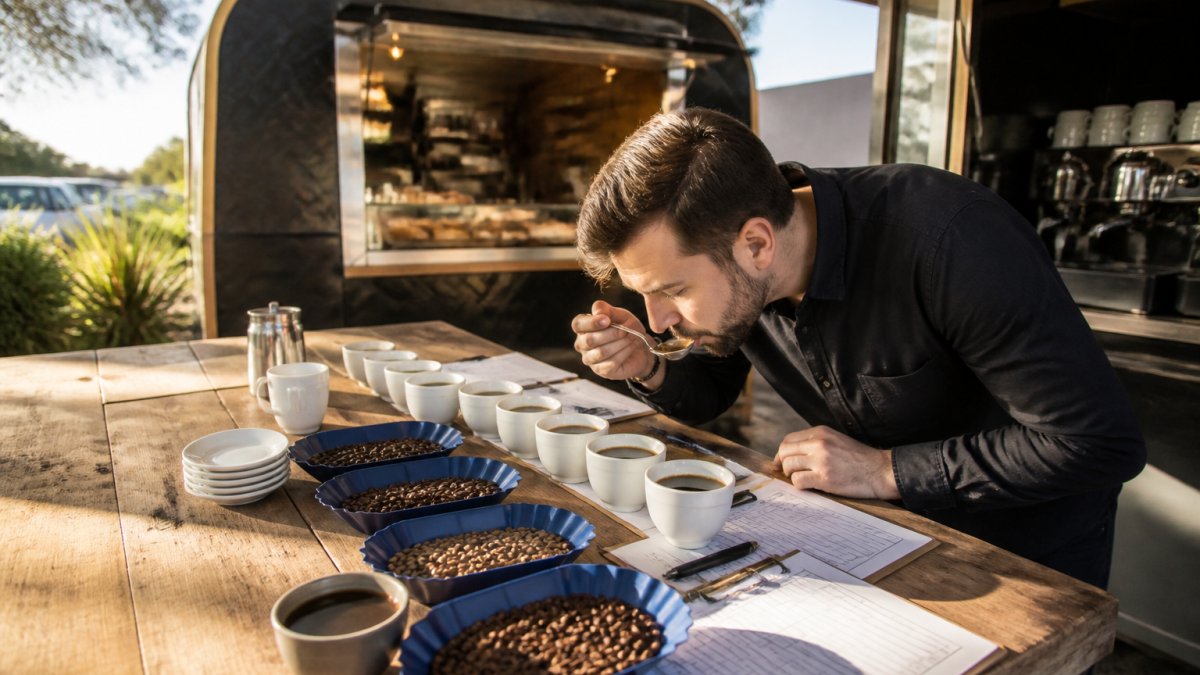
How to Taste Specialty Coffee and Identify Quality
Tasting coffee intentionally is different from drinking it casually. You can learn to identify the qualities that define specialty grade.
Cupping Basics for Home Brewers
Cupping is the professional method for evaluating coffee. You don't need expensive equipment to do a simplified version at home.
Simple home cupping:
- Brew coffee using your normal method (pour-over, French press, or espresso)
- Let it cool to about 160°F (70°C)
- Smell the aroma
- Slurp the coffee loudly (this aerates it and helps you taste it fully)
- Notice flavors, acidity, body, and aftertaste
Repeat this 2-3 times as the coffee cools. You'll notice how flavors change as temperature drops. Specialty coffee typically reveals more complexity as it cools.
Compare two coffees side by side. Brew them the same way, taste them at the same temperature, and notice the differences. This comparison method trains your palate quickly.
Key Flavor Attributes and Balance
Specialty coffee has identifiable flavor attributes. Learning these helps you understand what you're tasting.
Common flavor notes in specialty coffee:
- Acidity: Brightness or sharpness on your palate (not sourness). Specialty coffees have clean, pleasant acidity
- Body: How heavy or light the coffee feels in your mouth. Specialty coffees have balanced body
- Sweetness: Natural sweetness from sugars in the bean (not added sugar). Quality coffee tastes sweet
- Flavor complexity: Multiple flavors present. You might taste chocolate, fruit, nuts, or floral notes
- Balance: All attributes work together. No single attribute overpowers the others
- Aftertaste: What lingers after you swallow. Specialty coffee has a pleasant, lingering finish
Commercial coffee often tastes flat or one-dimensional. Specialty coffee reveals layers of flavor. This complexity is what you're paying for.
A Practical Buyer Checklist for Specialty Grade Beans
Use this checklist when evaluating a bag of specialty coffee:
- Roast date is printed and within 4 weeks
- Cupping score or "specialty grade" designation is stated
- Single origin or specific farm is named
- Processing method is listed (washed, natural, honey, etc.)
- Altitude is included
- Beans appear uniform in size and color
- No musty or off-smell when you open the bag
- No visible primary defects (black beans, broken beans, mold)
- Bag is sealed to protect freshness
- Price reflects specialty grade (significantly higher than commercial coffee)
Not every bag will check every box. But specialty grade coffee should check most of them.
Verifying Grade Claims and Avoiding Marketing Hype
This is where most coffee buyers get fooled. Marketing language doesn't equal quality.
Words like "premium," "artisanal," "small-batch," and "craft" sound impressive. They have no official meaning in coffee grading.
How to verify a specialty grade claim:
- Look for a specific cupping score (80-100 on a 100-point scale)
- Check if the score comes from a credible source (Specialty Coffee Association, certified Q grader, or recognized third party)
- Verify the roast date, if it's missing, the coffee isn't specialty grade
- Research the farm or cooperative if it's named. Specialty grade coffees typically come from known producers
- Compare the price. Specialty grade costs more than commercial coffee because it's actually different
If a bag claims "specialty grade" but shows no score, no roast date, and no origin details, it's marketing hype. Real specialty grade coffee stands on data, not adjectives.
We're transparent about our sourcing and grading. We include roast dates, processing details, and tasting notes on every bag.
Identifying specialty grade coffee beans takes practice, but it gets easier. Start by checking roast dates and looking for cupping scores.
Frequently Asked Questions
What does an 80-point score mean for specialty grade coffee beans?
An 80-point score on the 100-point scale marks the threshold for specialty grade coffee. Scores of 80 to 100 indicate beans that have passed rigorous cupping evaluation by certified Q graders, meeting strict standards for aroma, flavor, acidity, body, balance, and the absence of defects. Below 80 points, coffee is classified as commercial grade, regardless of how fresh or well-packaged it appears.
How can I verify that specialty coffee beans are actually fresh roasted?
Check the roast date printed on the bag, specialty roasters always display this prominently. Beans are freshest within 2 to 4 weeks of the roast date. Avoid bags without a roast date or with vague language like 'recently roasted.' Reputable specialty roasters include roast dates because freshness is central to specialty grade quality. Single-origin and traceable beans from established roasters are more likely to have accurate roast dates than unmarked commercial options.
What information on a coffee bag indicates it's specialty grade?
Look for a cupping score or Q score (80 or higher), the roast date, origin details (specific farm, region, or cooperative), processing method (washed, natural, honey), and altitude. Many specialty roasters also list tasting notes and the name or contact of the roaster. Bags lacking a score, roast date, or origin information are unlikely to be specialty grade, even if they claim to be premium or artisanal.
Can I judge specialty grade coffee just by looking at the beans or tasting it once?
Not reliably. Roast level affects appearance, and a single brew may not reveal balance or subtle defects. Specialty grade requires consistent quality across multiple cups and professional cupping evaluation. At home, brew the same beans several times using the same method to assess balance, sweetness, and aftertaste. If you notice inconsistency or off-flavors across brews, the beans may not meet specialty standards, or your brewing technique may need adjustment.