 comparison
What Makes Light and Dark Roast Coffee Taste So Different?
Last Updated: October 25, 2026
Quick Summary
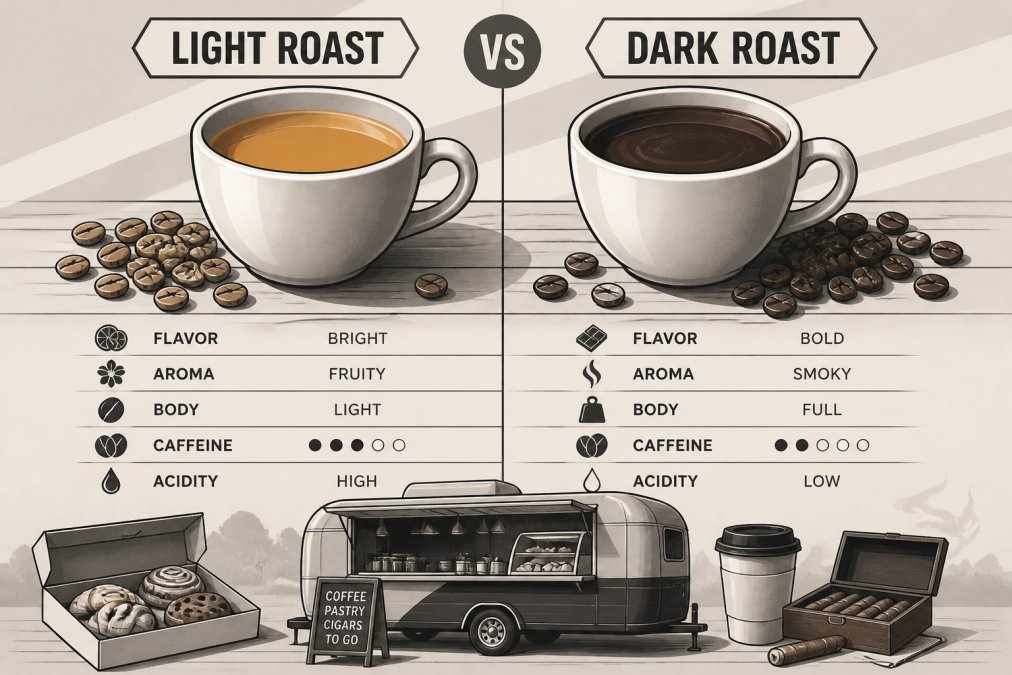
Light dark roast flavor differs dramatically because roasting time controls which flavor compounds develop: light roasts preserve bright, fruity, and citrus notes with high acidity, while dark roasts develop bold, smoky, and chocolate flavors with lower acidity and heavier body.
- Light roasts are removed from heat before full brown color, typically showing light tan or cinnamon hue and preserving origin character.
- Dark roasts are roasted longest, turning beans nearly black, with roast flavors that make different origins taste more similar.
- Light roasts have thin, delicate body with bright crisp acidity; dark roasts have full, heavy body with smooth, less sharp acidity.
- Roasting does not create or destroy meaningful caffeine because caffeine is a stable alkaloid that survives typical roast temperatures.
- Medium roasts balance origin character and roast-developed flavors with moderate acidity and work well for most brewing methods.
Table of Contents
- How Roasting Changes Coffee Flavor
- Coffee Roast Levels Explained
- Light vs Dark Roast Acidity and Body
- Light vs Dark Roast Caffeine Content
- Best Coffee Roast for Espresso
- Origin Character Versus Roast Development
- Tasting Light and Dark Roasts at Home
- Choosing Your Next Roast Level
- Frequently Asked Questions
How Roasting Changes Coffee Flavor
Roasting is where coffee truly becomes coffee. Before roasting, beans are green, dense, and nearly flavorless. Intense heat triggers chemical reactions that develop the light dark roast flavor, aromas, and colors we recognize.
The longer beans roast, the more dramatically their flavor profile shifts. Light roasts preserve bright, delicate characteristics. Dark roasts develop deeper, more intense flavors.
This guide breaks down what happens during roasting and how it affects your coffee.
Coffee Roast Levels Explained
Coffee roasting falls into three main categories, each with distinct characteristics. Roast level controls which flavor compounds develop and which fade away. Most specialty roasters use visual cues, bean color and surface appearance, to identify when a roast reaches the desired stage.
Light Roast: Bright, Fruity, and Nuanced
Light roasts are removed from heat before the beans reach a full brown color, typically showing a light tan or cinnamon hue.
Light roasts tend toward fruity, floral, and citrus notes with the light dark roast flavor profile, bright crisp acidity, and a lighter body that feels thinner on your palate than darker options.
One key advantage: light roasts reveal differences between origins more clearly.
Medium Roast: Balanced Flavor and Body
Medium roasts split the difference between light and dark. The beans develop a deeper brown color, and the roast offers a balanced combination of origin character and roast-developed flavors.
Medium roasts have moderate acidity and a rounder, fuller body than light roasts, with both bright notes and deeper caramel or nutty undertones.
Medium roasts work well for most brewing methods, from drip to pour-over to espresso, and their balance means less adjustment in brewing technique.
Dark Roast: Bold, Rich, and Smoky
Dark roasts are roasted the longest, turning the beans nearly black or very dark brown. Origin characteristics fade significantly, replaced by bold roast flavors.
Dark roasts taste smoky, bold, and intense, with chocolate, caramel, or bittersweet notes, a full, heavy body, and lower acidity that many find smoother and less sharp than lighter options.
A crucial insight: dark roasting makes coffees taste more alike.
Each roast level produces distinct flavor characteristics, body, and acidity.
| Roast Level | Flavor Profile | Body | Acidity |
|---|---|---|---|
| Light Roast | Fruity, floral, citrus, bright | Thin, delicate | High, bright and crisp |
| Medium Roast | Balanced origin and roast flavors, caramel, nutty | Rounder, fuller | Moderate |
| Dark Roast | Smoky, bold, chocolate, caramel, bittersweet | Full, heavy | Low, smooth and less sharp |
Light vs Dark Roast Acidity and Body
Acidity and body are two separate dimensions that change dramatically across roast levels. Understanding both helps you predict what a coffee will taste like before you brew it.
Acidity refers to the brightness and sharpness you feel on your palate.
Body describes how heavy or light the coffee feels in your mouth.
The relationship between roast level and body is consistent: longer roasting increases body, because roasting removes moisture and the chemical breakdown of compounds creates a heavier mouthfeel.
Light vs Dark Roast Caffeine Content
Caffeine comparisons between light and dark roasts are among the most misunderstood topics in coffee, largely because the claims people repeat are measured on different bases. Knowing what is actually being compared helps.
The measurement problem
Caffeine content can be expressed at least four ways, and each produces a different answer:
- By bean count. A single light-roast bean and a single dark-roast bean from the same green coffee contain essentially the same caffeine. Roasting does not create or destroy meaningful amounts of caffeine, because caffeine is a stable alkaloid that survives typical roast temperatures. What changes is bean mass: dark roasting drives off moisture and volatile compounds, so a dark bean weighs less than a light bean from the same batch.
- By weight of ground coffee. Because dark beans lose mass during roasting, a 10-gram scoop of dark roast contains more individual beans than a 10-gram scoop of light roast. If you dose by weight, the caffeine per gram of ground coffee is close to identical across roast levels.
- By scoop volume. This is where most confusion originates. A standard scoop filled with dark roast holds more beans by count than the same scoop filled with light roast, because dark beans are less dense. If you brew by volume rather than weight, a dark roast can deliver somewhat more caffeine per scoop, not because the beans are stronger but because you packed in more of them.
What this means for you
If you are sensitive to caffeine, changing roast level is a weak lever. Control dose and brewed volume instead: weigh your coffee, keep your coffee-to-water ratio consistent, and adjust the total amount you drink. Switching from dark to light at the same weight and brew ratio produces little noticeable difference, while changing the dose by a few grams produces a clear one.
To compare roasts fairly, use the same weight of coffee, the same grind setting adjusted for each bean's density, and the same brew ratio. Then judge the cup on flavor, not an assumed caffeine difference that probably will not show up.
Best Coffee Roast for Espresso
Espresso requires specific roast characteristics to pull properly. Medium to dark roasts work best because their lower acidity and fuller body translate to richer crema and a more balanced shot.
Light roasts can work in espresso but demand more precision: bright acidity and delicate flavors can turn sour or thin if grind or water temperature isn't dialed in.
Medium-dark roasts excel in espresso because they're forgiving: the fuller body masks minor brewing mistakes and the lower acidity produces a smoother, more balanced shot. If you're new to espresso, start here and dial in your espresso grind for best results.
Dark roasts can work beautifully in espresso too, though they risk becoming bitter if over-extracted.
Origin Character Versus Roast Development
This tension defines coffee tasting. Origin character refers to the natural flavors from where the coffee was grown: altitude, soil, rainfall, and processing method.
Light roasts emphasize origin character, so you taste the coffee's birthplace more clearly.
Dark roasts emphasize roast development: heat-created flavors dominate, so a dark roast Ethiopian and a dark roast Kenyan taste more similar.
This is why specialty coffee enthusiasts often prefer light and medium roasts: they want to taste the origin story.
Understanding this relationship helps you choose coffee intentionally. For bold, consistent flavors, dark roasts deliver reliably. Learn more about single origin coffee beans to deepen your appreciation for origin character.
Tasting Light and Dark Roasts at Home
Most roast-level guides describe flavor in the abstract but never show you how to verify it in your own kitchen. A simple, repeatable side-by-side tasting closes that gap. The goal isn't to become a professional cupper; it's to remove variables so the only thing changing between cups is roast level.
Set up a controlled comparison
Use the same green coffee roasted to two levels if you can find it, or two coffees from the same origin and processing method at different roast levels. Brew both with the same method, water, and coffee-to-water ratio by weight. A pour-over or drip brewer works well because the variables are easy to hold steady.
Adjust grind slightly for density: light-roast beans are denser and often need a touch more extraction, while dark-roast beans are more porous and can over-extract quickly. Keep dose and water weight identical, and change only the grind if one cup tastes clearly under- or over-extracted.
A four-step tasting protocol
- Aroma, before and after stirring. Smell the dry grounds first, then the brewed cup, then again after a stir. Light roasts typically show fruit, floral, or tea-like aromas that fade as the cup cools. Dark roasts tend toward cocoa, toasted nut, caramel, and smoky or roasty notes that often intensify as the cup cools.
- First sip at around 160°F. Hot coffee masks nuance. At this temperature you can still perceive sweetness and acidity without scalding your palate. Note the first impression: bright and juicy, or round and bittersweet.
- Mid-palate body. Swallow and notice how the coffee coats your mouth. Light roasts usually feel thinner and more tea-like; dark roasts feel heavier and more syrupy. This is the most reliable difference to detect, even for beginners.
- Finish and aftertaste. Wait 20 to 30 seconds after swallowing. Light roasts often finish clean and fade quickly, sometimes leaving a juicy or floral echo. Dark roasts tend to leave a longer, sometimes drying or bittersweet finish. The finish is where roast level is easiest to identify once you know to look for it.
What to write down
Keep notes short: aroma, first impression, body, finish. After two or three tastings you'll see a pattern, and the pattern is the point. You're training your palate to separate roast-driven flavors from origin-driven ones, the foundation for choosing coffee intentionally rather than by label.
Once you can identify these differences reliably, apply the same cues to any coffee you brew. Explore proper brewing methods for fresh roasted coffee to get the most from your beans.
Choosing Your Next Roast Level
Your roast choice depends on your brewing method, taste preferences, and what you want from coffee.
Choose dark roast for bold, intense flavors, lower acidity, smoky or chocolate notes, or espresso machines.
The practical approach: buy small quantities of light, medium, and dark roasts from the same origin.
When you're ready to explore specialty coffee seriously, check the roast date on every bag.
Frequently Asked Questions
Does light roast coffee have more caffeine than dark roast?
The difference is minimal. Light roast and dark roast contain nearly identical caffeine levels per bean because caffeine is heat-stable and does not burn away during roasting. The perceived difference comes from body and flavor intensity, dark roasts taste bolder, which some people interpret as stronger. Brewing method and bean-to-water ratio have far more impact on caffeine content than roast level.
Which roast has more acidity, light or dark?
Light roasts retain more acidity and brightness. The roasting process breaks down acids and develops heavier, fuller-bodied compounds. Light roasts preserve more of the coffee's natural acids, creating a tangy, vibrant cup. Dark roasts taste smoother and less sharp because prolonged heat neutralizes much of that acidity. If you have a sensitive stomach, medium or dark roasts may feel gentler.
Why does dark roast coffee taste bitter?
Dark roast tastes bitter because prolonged roasting develops bitter compounds and caramelizes sugars in the bean. The longer the bean sits in the roaster, the more the roast flavors, charcoal, smoke, and burnt sugar notes, dominate the cup. These roast flavors can mask the coffee's origin characteristics. This is not a flaw; many people prefer the bold, rich profile. Freshness and brewing method also affect perceived bitterness.
What's the best coffee roast for espresso?
Medium to dark roasts work best for espresso. Espresso's high pressure and fast extraction pull out bitter compounds quickly, so a darker roast's heavier body and lower acidity create a balanced, full-bodied shot. Light roasts can taste sour or thin in espresso because their delicate, acidic profile becomes overly sharp under pressure. Medium roasts offer a middle ground with some origin character preserved alongside roast development.
The roast level you choose shapes your entire coffee experience. Light roasts offer complexity and origin character. Dark roasts deliver bold, consistent flavors. Medium roasts provide balance. None is objectively superior, they're different tools for different preferences. Start by understanding what each roast offers, then experiment until you find what you genuinely enjoy drinking. That's the only metric that matters.